Double Check Valve Enclosures: Best Way To Protect DC Assemblies

Above-ground aluminum enclosures are the best choice for double check valve enclosures
Jump To Topic

Double check valve enclosures are above-ground protective covers that shield DC backflow assemblies from freezing, vandalism, theft and physical damage while preserving access technicians need for testing and maintenance.

The governing standard for these enclosures is ASSE 1060, which sets requirements for structural strength, drainage, security and freeze protection. Because a double check assembly can fail without any visible warning, the enclosure protecting it has to do more than keep the rain off.

Here’s how the assembly works, why it needs protection and how to specify the right enclosure for your project.

About Double Check Valve Assemblies

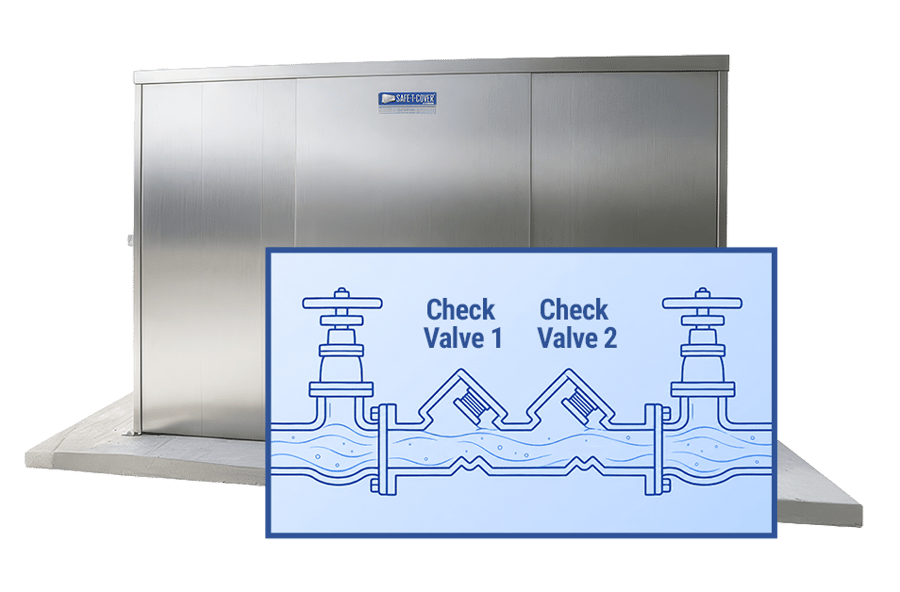
A double check valve assembly (DC) is a backflow preventer built around two independently operating spring-loaded check valves installed in series between two shutoff valves. Any time pressure on the property side exceeds pressure on the city side, the check valves close and stop water from flowing backward into the public supply. If the first check fails to seal because of debris or a mechanical issue, the second check provides redundancy.

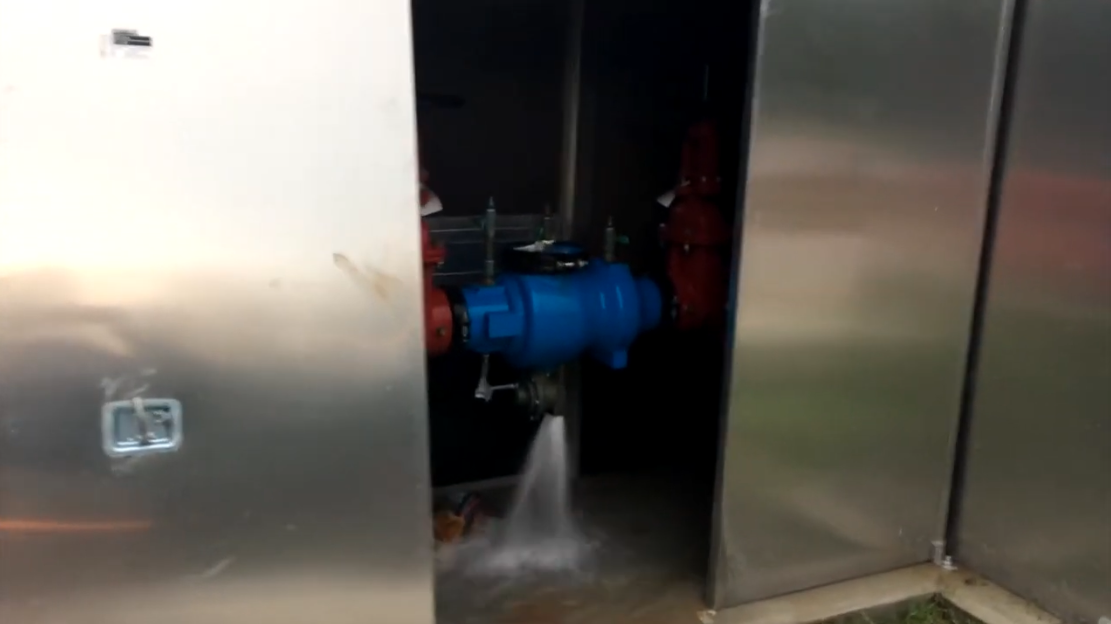
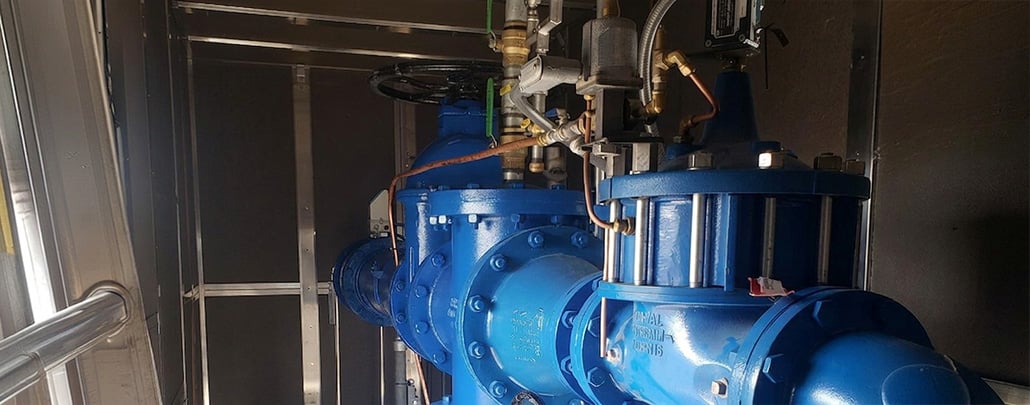
The interior of a DC valve in front of an aluminum enclosure


Redundant Check Valves Prevent Backflow

Common specifications for double check valve assemblies include spring-loaded cam-check valves along with test cocks that give technicians the connection points needed for maintenance and periodic testing.

DC assemblies protect against both back pressure and back siphonage and are approved for operation under continuous pressure. They’re commonly specified for fire protection systems and other applications where the water on the property side poses a lower contamination risk. Unlike a reduced pressure zone assembly, a DC can be installed above grade or below grade, although below-grade installation carries major problems, which we’ll get to.

Why DC Assemblies Are Approved for Low-Hazard Applications Only

In most jurisdictions, DC assemblies are acceptable for low-hazard conditions only. The water purveyor or authority-having jurisdiction (AHJ) determines what qualifies as low hazard, and the threshold varies from one city to the next.

Many cities publish a list of named examples, and most reserve the right to make the hazard call during plans review if your application isn’t on it. If you’re unsure which device your project requires, ask the purveyor before you design around a DC. There’s no penalty for specifying a higher level of protection, so when the hazard determination is ambiguous, an RPZ is an acceptable answer.

2 Problems With Double Check Backflow Preventers

A DC assembly that’s working properly is invisible in the best sense. The trouble is that a DC assembly that’s failing is invisible, too. Because the device is a closed system with no relief valve, it has two inherent blind spots:

  1. No visible indication the check valves are working. A DC has no mechanism that reveals whether its internal checks are sealing properly. An RPZ dumps water from its relief valve when something is wrong. A DC gives you no such indicator.
  2. No way to detect debris without a full test. A pebble, scale fragment or other contaminant lodged in a check valve can hold it partially open. The only way to find out is a differential pressure test by a certified backflow tester.

Because a double check assembly can fail silently, the enclosure around it matters even more. The device depends entirely on regular testing to prove it’s working, so anything that blocks access to the test cocks, buries the assembly in a flooded vault or lets it freeze solid undermines the whole cross-connection control program.

DC or RPZ: Which Assembly Does Your Application Need?

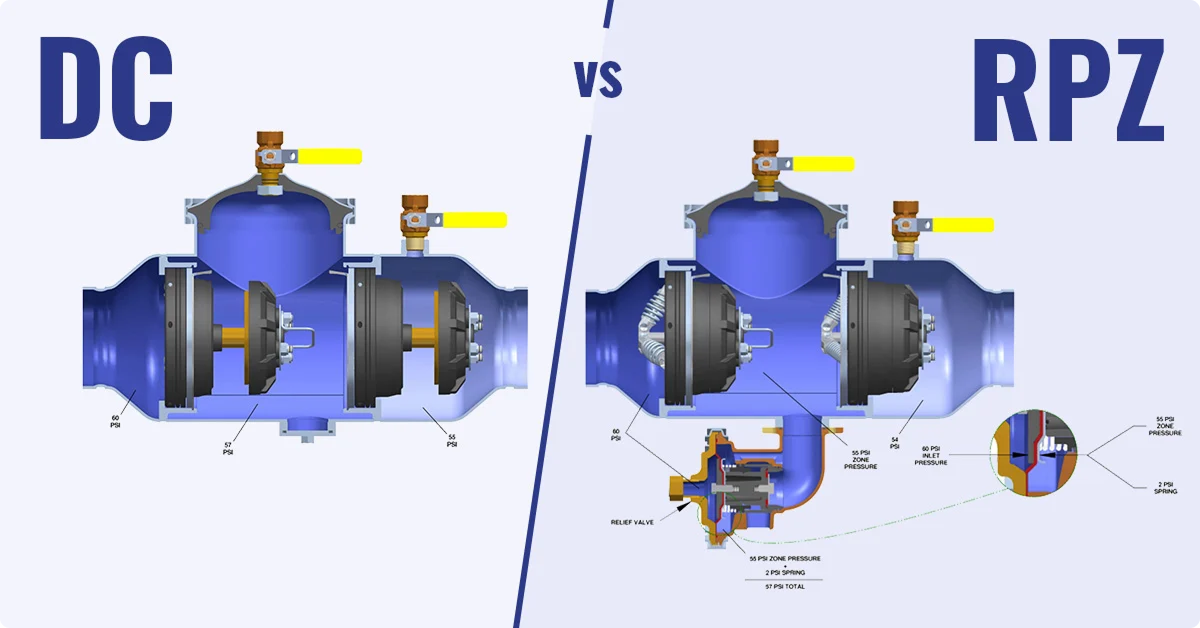
DC versus RPZ infographic

Designers choose between two primary backflow prevention devices: the double check valve assembly for low-hazard conditions and the reduced pressure zone assembly (RPZ) for high-hazard conditions.

Both use two independently operating check valves. The RPZ adds a hydraulic differential relief valve below the first check that opens and disposes of backward-flowing water if either check fails. That relief valve makes the RPZ effectively fail-safe, and it also makes the RPZ announce its own malfunctions: water discharging from the relief valve means something is wrong.

Double Check (DC)
Reduced Pressure Zone (RPZ)
Design
Two spring-loaded check valves in series
Two check valves plus a differential relief valve
Hazard Level
Low-hazard applications only
All hazard levels
Failure Behavior
Fails silently; no external indication
Relief valve discharges water
Installation
Above grade or below grade (though vaults are not recommended)
Above grade only
Drainage Needs
Standard enclosure drainage
Must handle relief valve discharge per ASSE 1060 Table 3
Typical Use
Fire protection systems, low-hazard service lines
Domestic water, irrigation, high-hazard premise isolation

In our Standard Details Guide, we recommend an RPZ for outdoor premise isolation on domestic water and irrigation lines, with a DC acceptable for fire sprinkler system isolation. In short, the DC is the right tool for genuinely low-hazard applications, and the purveyor decides what counts as low hazard.

Why Double Check Valve Enclosures Matter

Once the assembly is specified, the next design decision is how to protect it. Double check valve enclosures address three risks that show up on real installations again and again.

1. Freeze Damage Happens Where You Least Expect It

Property owners still improvise cold-snap protection with towels, tarps and overturned trash cans. Facility-scale assemblies deserve better.

Water trapped inside a check valve expands as it freezes and can crack the valve body, and a single overnight freeze is enough to do it. Sun Belt cities have learned this the hard way across Florida, Texas and Arizona. A heated ASSE 1060 Class I enclosure keeps the assembly above 40°F even when outside temperatures drop to -30°F, with no seasonal winterization to schedule and no risk of doing it late.

2. Theft and Vandalism: Brass Assemblies Are Scrap-Metal Targets

Backflow assemblies are heavily constructed of brass and copper, which makes them frequent targets for scrap metal thieves. A wire cage advertises exactly what’s inside it, but a solid lockable enclosure conceals the assembly entirely and removes both temptation and opportunity. ASSE 1060 requires lockable access on every certified enclosure by keyed device or padlock.

3. Testing Access: Annual Testing Requires Clearance

Most jurisdictions require DC assemblies to be tested at least annually by a certified backflow tester. The enclosure has to make testing easy.

ASSE 1060 requires test cocks, valve handles and handwheels to sit within 24 inches of an access opening, and typical design practice calls for 6 to 12 inches of clearance between the assembly and the enclosure walls so technicians can connect test equipment.

A properly sized enclosure with removable panels gives a tester full access without disassembling anything. A tight-fitting cage does the opposite, and a below-grade vault turns a routine test into an OSHA confined space entry.

How To Choose a Double Check Valve Enclosure

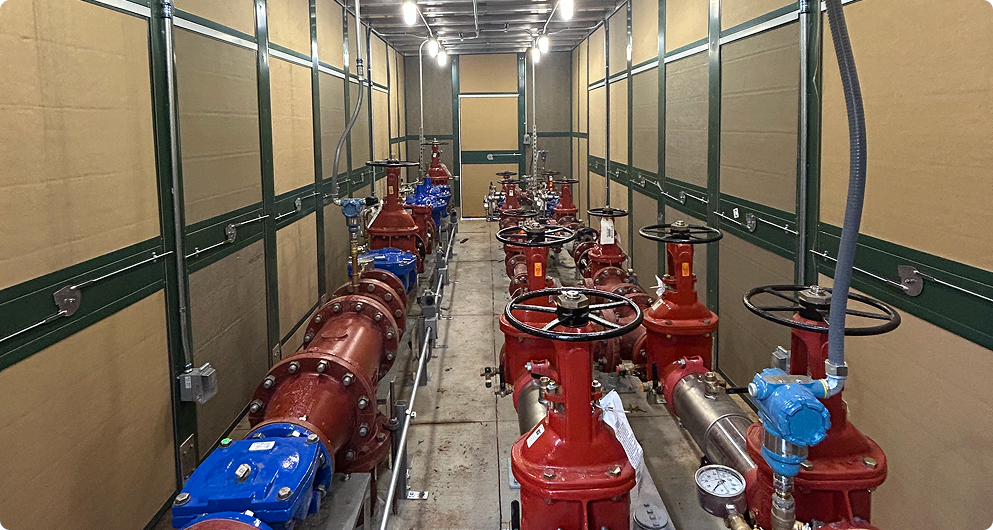
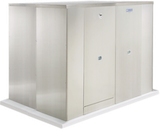
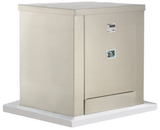
DC enclosure large

Start With ASSE 1060 Compliance

Make sure your enclosure manufacturer complies with the ASSE 1060 standard. Certified enclosures must support a 100 psf vertical load, drain fast enough to keep equipment from being submerged, lock securely and keep access panels at 70 pounds or less. Safe-T-Cover’s entire production line of backflow covers carries the ASSE 1060 seal of compliance.

Verify that both the enclosure and the assembly inside it also meet your local plumbing codes; jurisdictions layer their own requirements on top of the standard.

Which ASSE 1060 Class Do You Need?

ASSE 1060 defines three enclosure classes with different levels of weather protection. Match the class to the lowest temperatures your site actually sees, not the one you hope for. Choose a Class I enclosure if your area experiences freezing temperatures, even if just overnight; these units pair internal insulation with a dedicated heat source.

Class
Protection Level
Best For
Class I
Heated. Maintains at least 40°F inside at -30°F outside; minimum R-value of 8
Any location where freezing is possible — the default for freeze protection
Class II
Holds 40°F for a 24-hour period; minimum R-value of 8; may or may not include a heater
Climates where temperatures never stay below 33°F for extended periods
Class III
No freeze protection and no minimum R-value. Safe-T-Cover does not manufacture Class III enclosures because nearly everywhere in the United States needs freeze protection.
Security and access protection only

If you need freeze protection, specify a Class I enclosure with the proper heater. All Safe-T-Cover standard aluminum enclosures shipped with our recommended heat comply with Class I requirements thanks to our patented slab-mounted heater. Manufacturers offer several heater types, including wall-mounted units and heat cables that wrap around the equipment.

Enclosure Materials Compared

The most common backflow enclosure options are aluminum enclosures, fiberglass enclosures, wire cages and below-grade vaults, with brick or block structures appearing occasionally. ASSE 1060 approves several exterior materials for enclosure construction, including aluminum, stainless steel and galvanized steel, all selected for durability and corrosion resistance; aluminum delivers those properties at the lowest weight.Each option behaves differently over a 20- to 30-year service life.

Material
How It Performs
Aluminum
Marine-grade 5052-H32 aluminum resists corrosion and often outlasts the equipment it protects. Meets ASSE 1060 in all three classes. Modular panels allow full 360-degree access for testing.
Fiberglass
Deteriorates, fades and cracks with UV exposure over time. Verify ASSE 1060 certification for the specific model and pipe size before specifying.
Wire cages
No freeze protection, concealment or ASSE 1060 compliance. Cages display the brass assembly to thieves.
Below-grade vaults
OSHA-classified confined spaces that flood, creating cross-connection risk from submerged test cocks. Several municipalities have moved away from vault installations entirely.

Sizing, Clearance and Drainage Requirements

Size the enclosure around the assembly, not the other way around. Plan for 6-12 inches of clearance around the device for test and maintenance access and confirm the enclosure’s drainage capability meets ASSE 1060 requirements for your pipe diameter.

If you need to protect a DC backflow preventer but aren’t sure what size enclosure you need, head to our sizing guide. Select the backflow device you have and we’ll figure out the right enclosure for you.

Color and Aesthetics

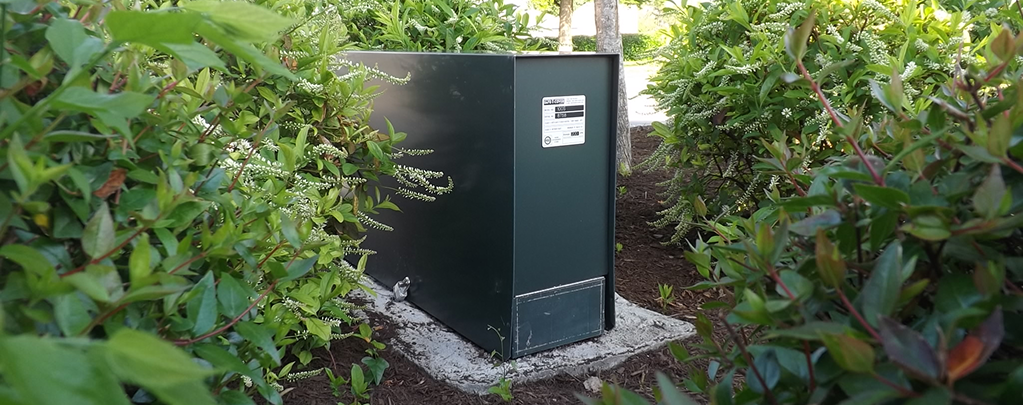
An enclosure doesn’t have to be an eyesore. Safe-T-Cover enclosures come in four standard colors at no extra charge: Brushed Aluminum, Hartford Green, Sierra Tan and Slate Grey. The green and tan blend into most landscaping environments, and custom colors are available for an additional fee. Thoughtful placement and landscaping around the device go a long way toward keeping it unobtrusive.

Why Safe-T-Cover Builds Enclosures From Marine-Grade Aluminum

We manufacture our enclosures from 5052-H32 marine-grade aluminum because the material is durable enough to outlast the equipment it protects. Some of our enclosures have been in the field for three decades!

We use a modular panel system to build enclosures in varying sizes without changing the style or machining special parts, which keeps assembly simple on site. We offer standard enclosure models as well as custom enclosures.

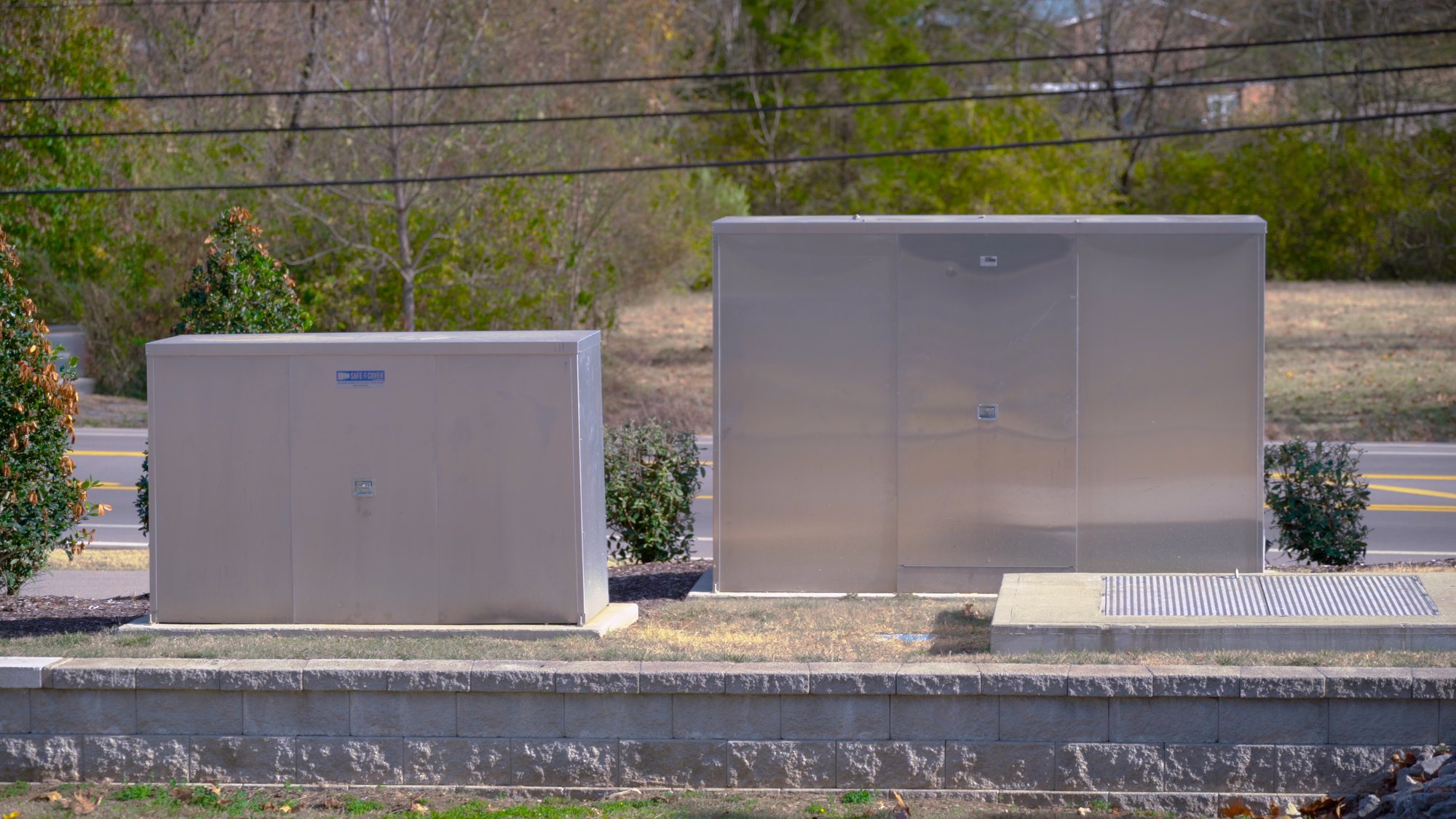
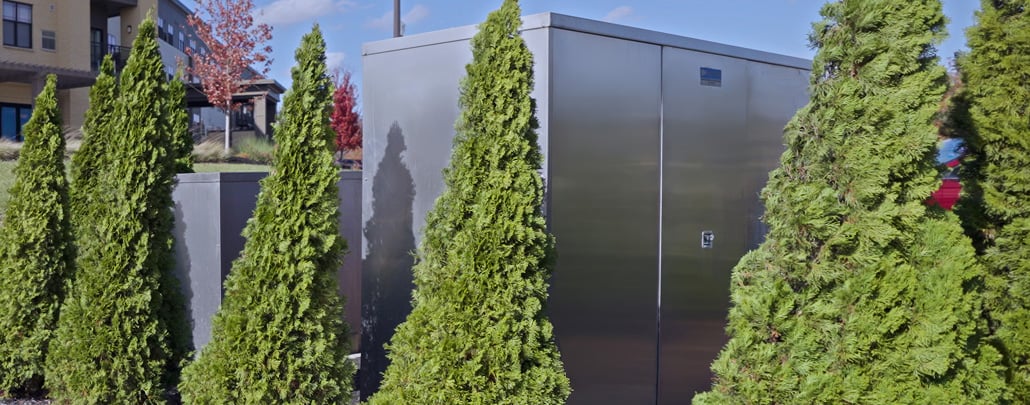
marine-grade aluminum enclosures

Local Codes Still Apply

Installation of double check valve enclosures must also comply with local plumbing codes and regulations, and jurisdictions differ on hazard classifications, testing frequency, setback requirements and approved device lists. Before finalizing a design, verify both the assembly and the enclosure against the standard details published by your water purveyor. When the local detail is silent on enclosures, following ASSE 1060 gives you good specification language.

Find the Right Enclosure for Your DC Assembly

Whether you’re writing a specification, reviewing standard details or replacing a freeze-damaged assembly, the right enclosure protects the device and the potable water supply behind it. Use the Safe-T-Cover sizing guide to match your double check valve assembly to an ASSE 1060-compliant enclosure, or contact a Safe-T-Cover design engineer for help.

FAQ

What size enclosure do I need for a double check valve assembly?

The enclosure size depends on the assembly model, pipe diameter and required clearances, generally 6 to 12 inches around the device plus test cock access within 24 inches of an opening. Safe-T-Cover’s sizing guide matches enclosure models to specific backflow assemblies so you don’t have to work out the dimensions yourself.

Where should double check valves be installed?

Install a DC assembly in an accessible location where a certified tester can reach the test cocks and shutoff valves, typically near the property line. Above-ground installation inside an ASSE 1060 enclosure provides the best combination of access, drainage and protection. Below-grade vaults create confined space hazards and flooding problems.

Are double check valves code compliant?

Yes, when the assembly is an approved model, installed per local plumbing code and matched to a low-hazard application as determined by the water purveyor. Compliance also depends on required testing.

How often do double check valves need to be tested?

Most jurisdictions require testing by a certified backflow tester at installation and at least once a year afterward. Some water purveyors require more frequent testing for specific applications, so confirm the schedule with your local authority.

What are common problems with double check valves?

The most common problem is debris lodging in a check valve and holding it partially open, which compromises the seal without any visible warning. Other problems include: worn springs and seals, freeze damage to the valve body and failures that go undetected between annual tests.

What are the disadvantages of using a double check valve?

A DC has no relief valve, so if both checks fail, contaminated water can reach the potable supply with no external sign of trouble. It’s approved for low-hazard applications only, and it depends entirely on periodic testing to confirm it’s working.

What is the difference between a backflow preventer and a double check valve?

A double check valve assembly is one type of backflow preventer. Other types include the reduced pressure zone assembly, which adds a relief valve for high-hazard applications, and the pressure vacuum breaker, which protects against back siphonage only.

What does a double check valve assembly do?

A double check valve assembly prevents contaminated water from flowing backward into the public water supply. Its two spring-loaded check valves close whenever downstream pressure exceeds supply pressure, and the second valve provides redundancy if the first fails to seal.

"You have some of the best customer service that I have come across, whether it be over the phone or email. Thank you for having such a high standard of excellence at your company, it makes us excited to quote and sell your products."
Nathan J.
Distributor
"Excellent, I must say, I have been doing this for almost 20 years and you guys are a pleasure to deal with."
Casey F.
New York
"We had an RPZ failure at the school I work at due to recent weather conditions here on Long Island. The floor-mounted heat sheet Safe-T-Cover offers would do a much better job."
Joe M.
New York
"The piping layout and enclosure sizing is awesome. It will make my life a little easier putting the finished product together."
Fire Protection Engineer
Rhode Island
"Safe-T-Cover provides the best answers and the fastest responses."
Distributor
Washington State
"You have really helped and I will be forwarding your information along to our facilities manager to move forward with a little more detective work. I appreciate your time and effort, and we will be in touch."
Procurement Specialist
California
"Thanks for getting back to me so quickly."
Civil Engineer
Ohio
"WOW!! Thank you. You guys are so great. Seriously, you always ship within the quoted time. We appreciate the hard work."
Waterworks Distributor
Midwest
"I've dealt with some of your competitors in the past and they do not pack enclosures like you do! Safe-T-Cover does a great job. I got one in the past that was damaged because of the packing, and the panels bounced around allowing the handles on the doors to dent the panels packed on top. It was an absolute nightmare to try and get it fixed. I don't have that problem with you!"
Distributor
"Thank you again for all your help. Safe-T-Cover has some good quality customer service and that goes a long way with me."
Contractor
Las Vegas, NV

Need a Custom Solution?

Our custom enclosures are engineered to your exact requirements, with options for size, access, climate control and added features.

Contact Us