Ventilation & Backdraft Damper

Your marine-grade aluminum enclosure has superior protection in the winter with an ASSE 1060 Class 1 rating. Equipment like backflow preventers needs the same level of care and consideration under the relentless summer sun. Fans and dampers provide critical airflow to keep your enclosure at optimal temperatures when the days are long and the temperatures are high.

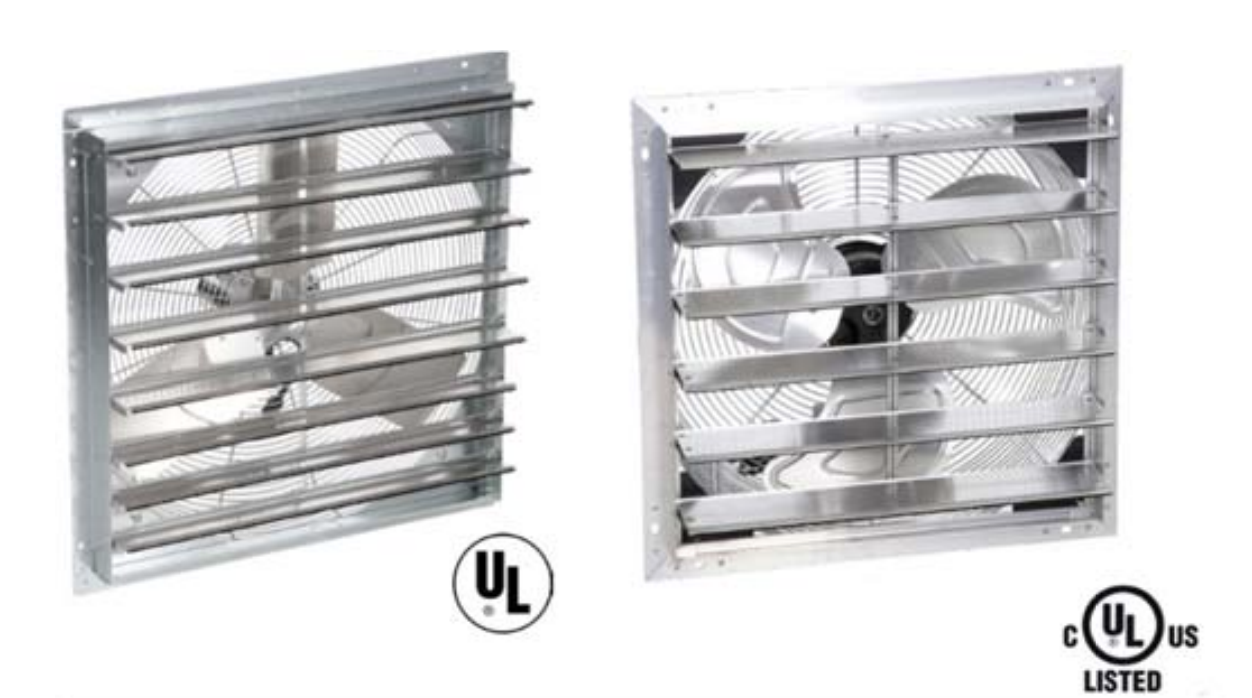
Shutter Mount Exhaust Fan

Insulated Enclosure Accessory

Shutter Mount Exhaust Fan
Summary

Featuring fully enclosed direct drive motors, these exhaust fans are designed to remove hot air from the enclosure. They mount from the inside of the panel.

Key Details
  • Models are CUL/UL Listed
  • Rear guard meets OSHA standards
  • Fully enclosed motor
  • Hard-wired unless otherwise indicated
Tech Specs

EDP No.

23002

Prop Dia.

12”

Panel Size (Square)

15⅛”

Wall Opening (Square)

13”

0” S.P. CFM

815

⅛” S.P. CFM

490

Motor HP

1/24

Volt

115

F.L. Amp

1.4 

Max. Sones @ 5’

7.6

Ship Wt.

12 


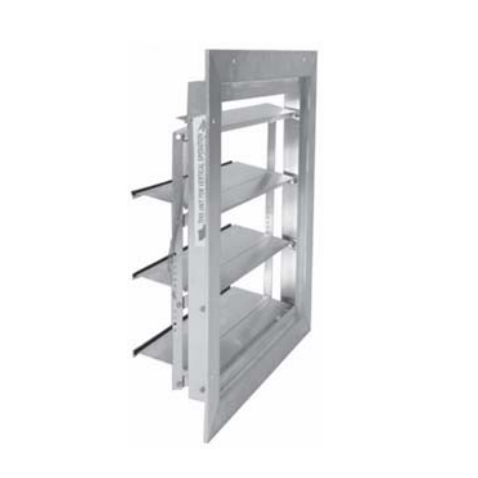
Backdraft Damper

Insulated Enclosure Accessory

Screen Shot 2024-10-22 at 10.52.37 AM
Summary

A rear-flanged gravity supply (intake) wall shutter. Frame and blades are mill finish aluminum with a galvanized reinforcement strip on each blade for strength and counter-balancing efficiency. The blades have a felt seal on the leading edge for quiet closing and better protection from the weather. Recommended for vertical mount supply (intake) only. The blades will pivot at the bottom and fall with gravity to open. Spring-assist to close.

Key Details
  • 16-gauge extruded aluminum frame
  • Aluminum blade
  • Galvanized steel tie rods
  • Stainless steel gardware
Tech Specs

Type

Wall Mount, Supply

Damper Size

12” x 12”

Overall Size

14-¾” x 14-¾”

Flange Width1⅜”

1⅜”

Max. Velocity

2,000 FPM


Enclosure Fans & Dampers FAQ

Why do backflow enclosures need fans and dampers?

Fans and dampers help control airflow and ventilation inside backflow enclosures. During high temperatures, an exhaust fan can remove excess heat, while a damper allows fresh air to enter, protecting backflow preventer assemblies and other equipment across their entire operating range.

What is a backdraft damper used for in a backflow enclosure?

A backdraft damper provides a controlled path for fresh air to enter an enclosure while helping prevent reverse flow when the ventilation system is not operating. Gravity dampers, as the name implies, use air flow and gravity to open and close their blades.

How do fans and backdraft dampers work together?

An exhaust fan removes hot air from the enclosure while a backdraft damper allows fresh air to enter. This creates controlled air flow through the enclosure, managing heat and improving ventilation around a backflow preventer, control valve, pump or other enclosed equipment.

What type of damper is used for backflow enclosure ventilation?

Gravity dampers, including backdraft dampers, are commonly used for enclosure ventilation. The damper blades open in response to airflow and close when air flow stops, controlling air direction and limiting unwanted outside exposure.

Can fans and dampers be installed on custom-size backflow enclosures?

Yes, ventilation components can be incorporated into enclosure designs based on your equipment requirements, air flow needs, and enclosure dimensions. Custom sizes and configurations accommodate different backflow preventer assemblies on their installation sites, as well as glycol pumps, quench tanks, fire water tanks and other critical equipment that needs security, protection from the elements and proper air flow.

What should I consider when selecting a damper for an equipment enclosure?

Consider the required air flow, air direction, pressure, enclosure size, environmental conditions, materials, and easy access for installation and maintenance requirements. Damper construction should also provide the durability and corrosion resistance needed for the enclosure's operating environment.

What is the difference between backdraft dampers and opposed blade dampers?

Backdraft dampers typically use gravity or airflow to control one-direction airflow and prevent reverse flow. Opposed blade dampers use adjacent blades that rotate in opposing directions to regulate air flow and are more commonly associated with safety measures on HVAC systems and controlled air distribution.

CONTACT US

Please contact us by filling out the form via the button below.
We're in the office 8am-4pm Central Time, Monday through Friday.