1. Air Gap
An air gap BPA uses a physical separation between the water distribution system (such as a faucet) and the sewer system (such as a drain). Water flows from the faucet to the drain, but it cannot reverse. Air gaps provide the highest level of backflow protection available. However, they are not always practical, especially in appliances with internal water systems such as dishwashers, dialysis machines, dental hygiene instruments or soft drink carbonation systems.
Approved for: back pressure, back siphonage, low-hazard applications, high-hazard applications.
Key considerations: Spatial and design constraints of the application, the ratio between the gap size and the inside diameter of the inlet pipe, and the proximity of the gap to the overflow level.
2. Double-Check Valve Assembly (DC)
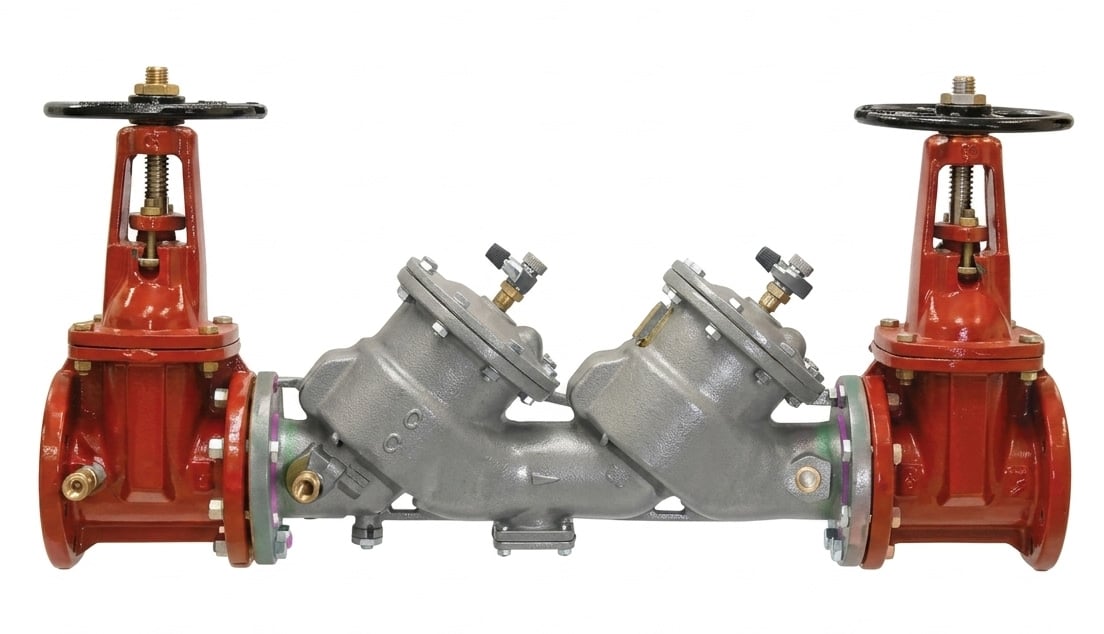
A DC valve assembly uses two independently operating spring-loaded check valves. When downstream pressure exceeds public-side pressure, the first check valve closes to stop backward flow. If that valve malfunctions due to debris or mechanical issues, the second check valve closes as a backup. DC assemblies can be installed above grade or below grade in subterranean vaults and are commonly found in fire protection systems.
One important limitation: there is no way to detect a check valve malfunction without conducting a full-scale test. For this reason, DC assemblies are not recommended for high-hazard applications.
Approved for: continuous pressure operation, back pressure, back siphonage, above-grade and below-grade installation, low-hazard applications only.
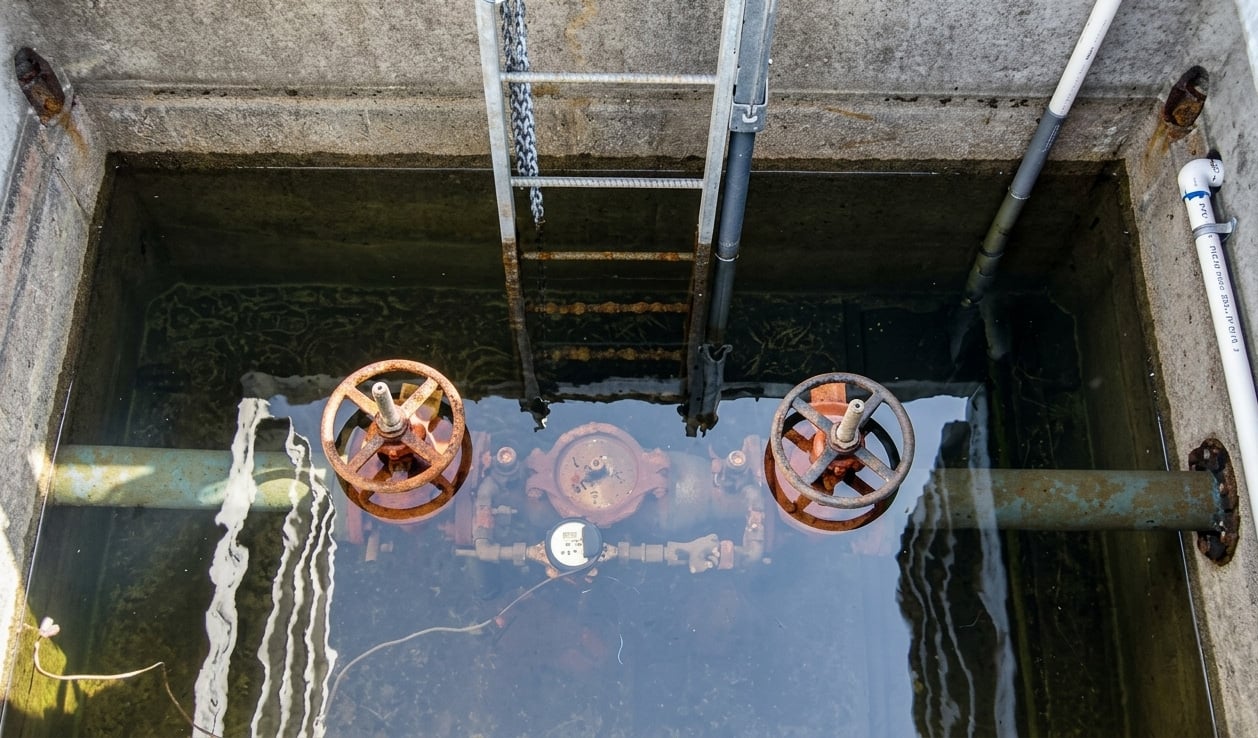
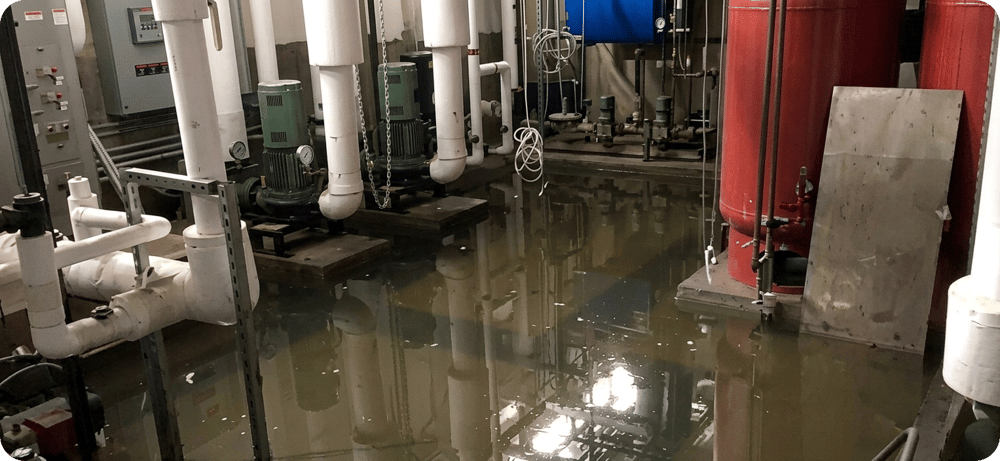
Key considerations: Horizontal installation unless approved for vertical by the local water authority, safe access for inspections and testing, adequate clearance for maintenance, and the risk of undetected valve malfunction leading to cross-connection. Installing this assembly in a concealed location such as an underground utility vault compounds the risk, since malfunctions produce no visible indication.
3. Reduced Pressure Zone Valve Assembly (RPZ)
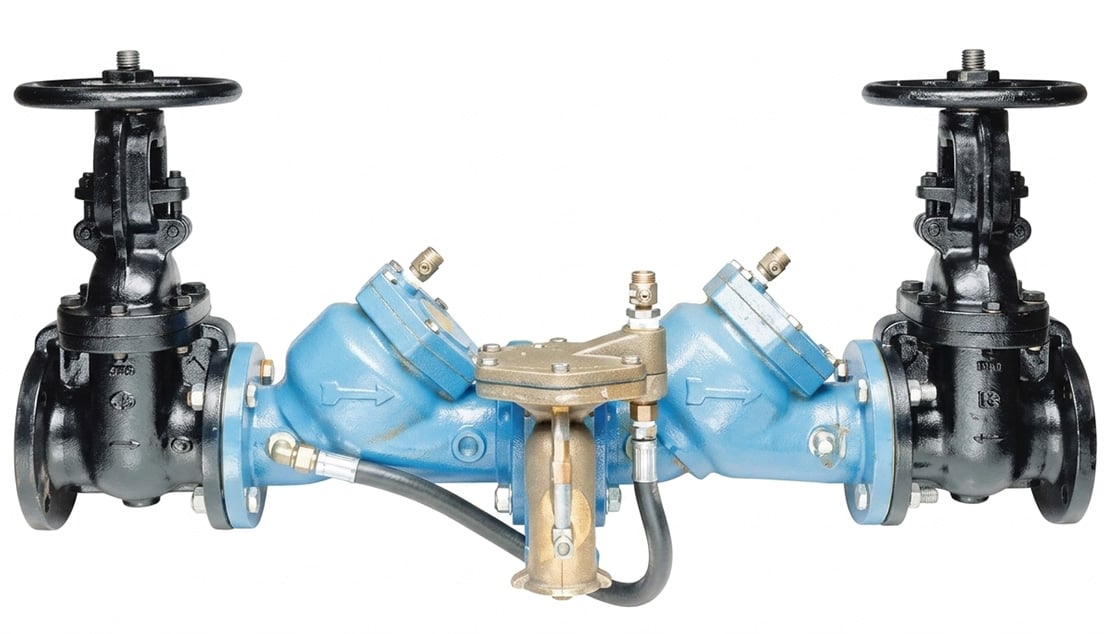
An RPZ valve assembly is similar to a DC but features a fail-safe design suited for every cross-connection situation, including high-hazard applications. In addition to two independently operating spring-loaded valves, RPZ assemblies include a hydraulic differential relief valve located between the two check valves. If a backflow event occurs and both check valves fail, the relief valve opens to create an air gap and dispose of the contaminated water.
Unlike DC assemblies, an RPZ's design inherently signals malfunction. If water dumps from the relief valve, the primary valves have a problem. If no water discharges, the primary valves are working properly.
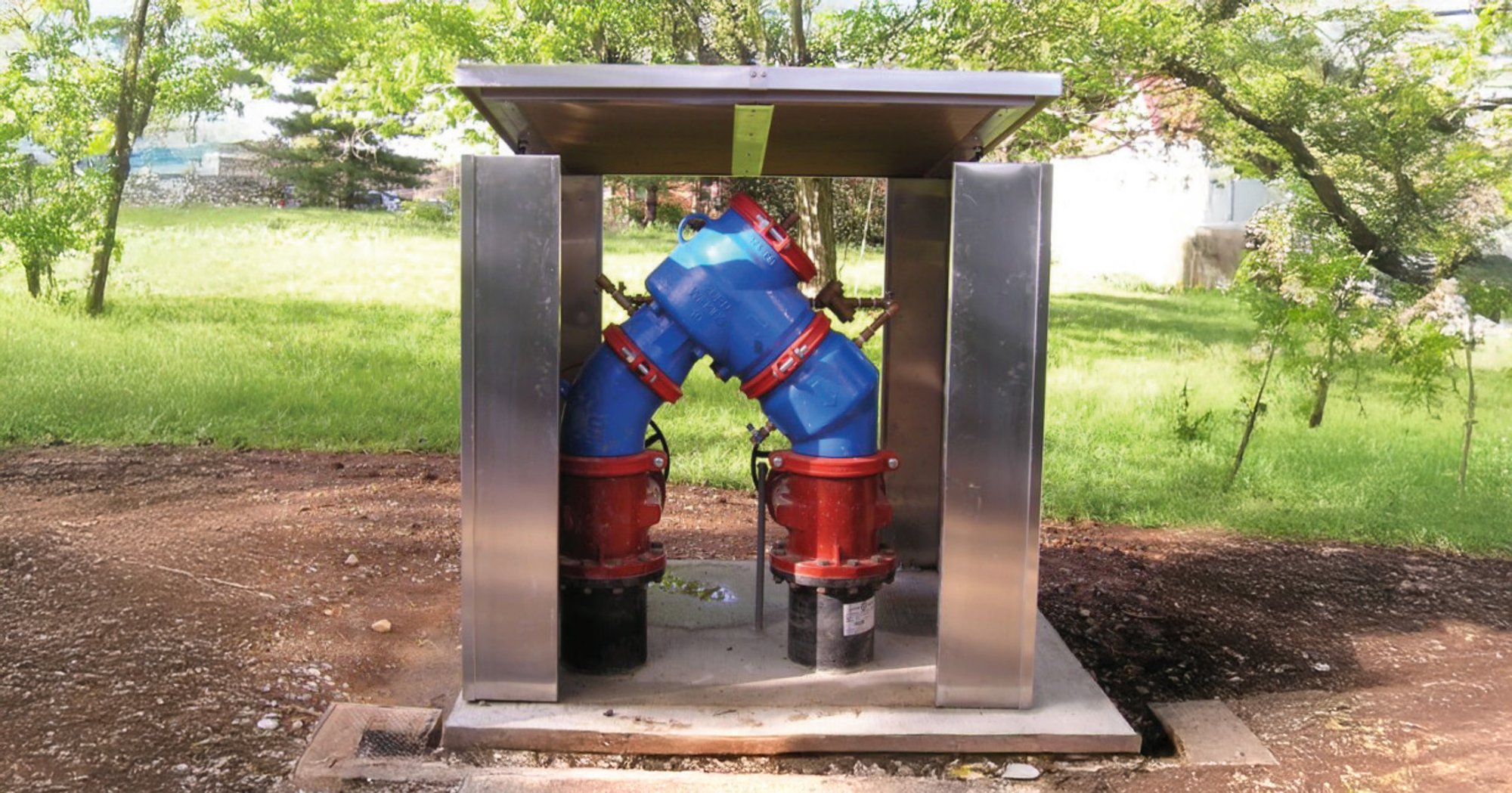
Approved for: continuous pressure operation, back pressure, back siphonage, all hazard levels, above-grade installation only.
Key considerations: Horizontal installation unless approved for vertical, safe access for inspections and testing, adequate clearance for maintenance, proper drainage capacity that meets minimum air gap requirements, and placement inside a commercial building is not recommended.
Even if double-check valves were once considered acceptable for a particular installation, it is important to confirm whether local standards have changed. Most municipalities now require RPZ valve assemblies due to their superior reliability.
For the most current list of approved backflow prevention assemblies from the FCCCHR, visit the USC FCCCHR approved list.


.png?width=1405&height=618&name=Green%20enclosures%20(1).png)
.png?width=1000&height=483&name=Flower%20enclosure%20(1).png)
.png?width=1004&height=484&name=Enclosure%20with%20trees%20(1).png)
-1.png?width=745&height=360&name=Frame%201%20(2)-1.png)



.jpg?width=206&name=MadeInUSA-Icon%20(1).jpg "MadeInUSA-Icon (1)")