Control Valve Enclosures

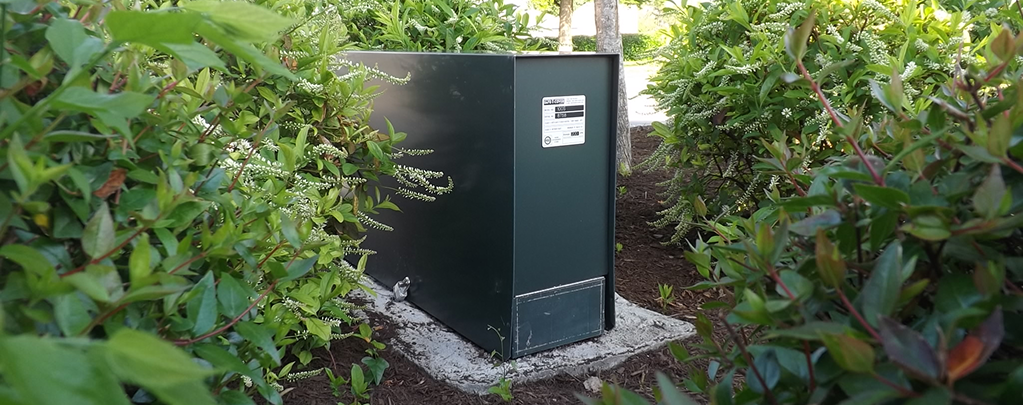
An aluminum control valve enclosure by Safe-T-Cover
Jump To Topic

A control valve enclosure is a secured, insulated shelter that protects flow control valve equipment from freezing, flooding, vandalism and unauthorized access. Above-ground aluminum enclosures certified to ASSE 1060 standards are preferred for keeping control valves running and code-compliant.

What Is a Flow Control Valve and Why Should It Be Protected?

Control valve equipment is sensitive and often mission-critical. The right cover keeps a flow control valve operating reliably, extends its service life and helps a facility meet code.

Flow control valves regulate the flow or pressure of liquids or gasses. They can be powered by electricity, air or water, and they serve as the final mechanism for control in any flow-based system. When a valve fails, the system it governs fails with it, so protecting that equipment is a direct investment in uptime.

Where Control Valves Are Used

Control valves are found across nearly every industry that moves fluid or gas. Common applications include:

  • Water treatment and distribution: Reduced pressure zone (RPZ) and double-check valve (DCV) assemblies protect the potable water supply from backflow and backsiphonage, while other valves manage municipal pressure and fire suppression flow. Controls valves are used to shut off these devices during emergencies.
  • Energy generation: Valves regulate steam and other fluids in power plants to hold ideal operating conditions.
  • HVAC: Valves sustain designated temperatures through heating and cooling coils; a faulty valve degrades performance and can lead to unit failure.
  • Chemical processing: Valves hold composition and pressure within preset parameters for consistent output.
  • Petrochemicals and fuel production: Valves regulate pressure and flow across extraction, production and refining.

A protective enclosure keeps the equipment that runs these systems consistent and efficient.

What To Consider When Choosing a Control Valve Enclosure

Specifying the right cover starts with the operating environment and the access your crews will need. Work through the following factors before selecting a model.

Environment

Is the control valve indoors or outdoors? For any control valve system, the valve should be kept in a secured, insulated enclosure able to withstand the elements and still allow liquids to escape if needed. Materials must stand up to the demands of the surrounding environment, whether that means summer heat and storms, winter ice and cold, or indoor exposure to excessive heat and moisture. Safe-T-Cover can design custom enclosures with accessories like fans, louvers and alarms that meet specific needs.

Size and Access

The cover should be large enough to adequately protect the control valve equipment while leaving ample space for inspection, servicing and repair. A modular, panel-based enclosure works well for many control valves because panels can be removed for full access. According to ASSE 1060, test cocks and valve handles must sit within 24 inches of the access opening, and hinged access panels must be restrained in the open and closed positions.

Pipe Penetration and Manipulation

The enclosure should also allow for easy pipe penetration, allowing pass-through as the installation requires. Confirm penetration locations against your assembly layout before ordering.

Freeze Protection and Insulation

Insulation and heat keep a valve operating through a freeze event. Safe-T-Cover standard wall panels use 1.5-inch R-9 insulation and roof panels use 3-inch R-18 insulation, and an outdoor installation should be paired with a slab-mounted heater rated for the lowest temperature the site may experience. A Class I heated enclosure is the best specification in any jurisdiction where a freeze event is even remotely possible.

Long-Term Maintenance

Control valves and systems need routine review and maintenance. The enclosure should not. A Safe-T-Cover enclosure provides years of low- to no-maintenance protection and service, so crews can focus on the equipment inside rather than the shelter around it.

Why Underground Vaults Fail Control Valve Systems

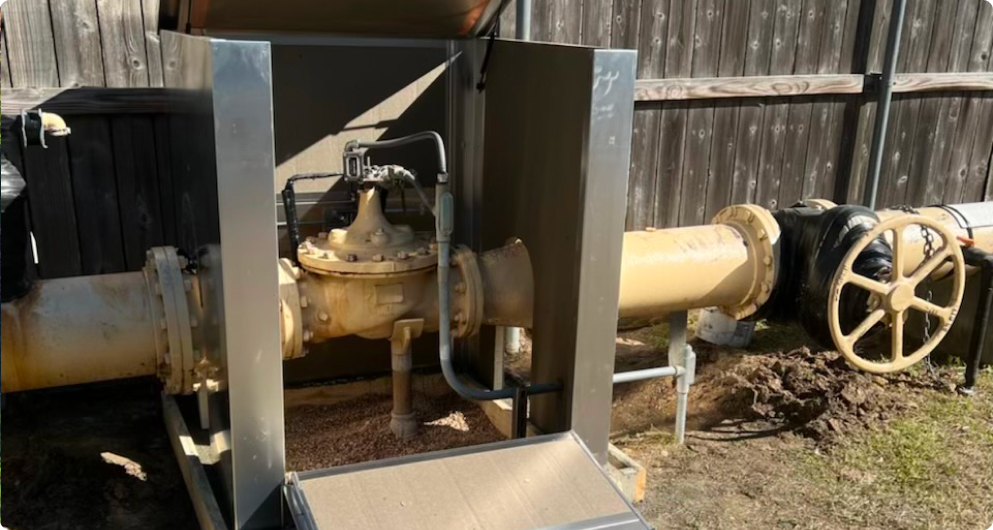
Historically, control valves have been installed in underground vaults, which are prone to flooding and, as enclosed spaces, pose a risk to personnel. Vaults flood far more often than most specifiers assume, and a submerged assembly cannot expel discharge, creating a direct cross-connection risk to the potable supply.

According to the USC Foundation for Cross-Connection Control and Hydraulic Research, flooded vaults create a cross-connection through the test cocks whether those test cocks are open or closed.

Vaults are also OSHA-classified confined spaces: between 2011 and 2018, more than 1,000 U.S. workers died from confined-space injuries, according to the Bureau of Labor Statistics Census of Fatal Occupational Injuries. Installing control valves above grade in a secured backflow enclosure removes the flooding and confined-space risks entirely.

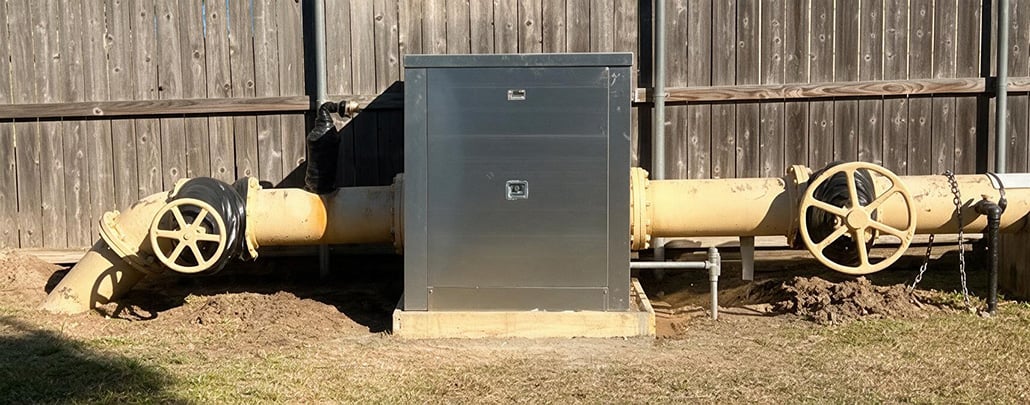
Above-ground installation in an insulated, ASSE 1060 enclosure solves the freeze, flood and safety problems that vaults create.

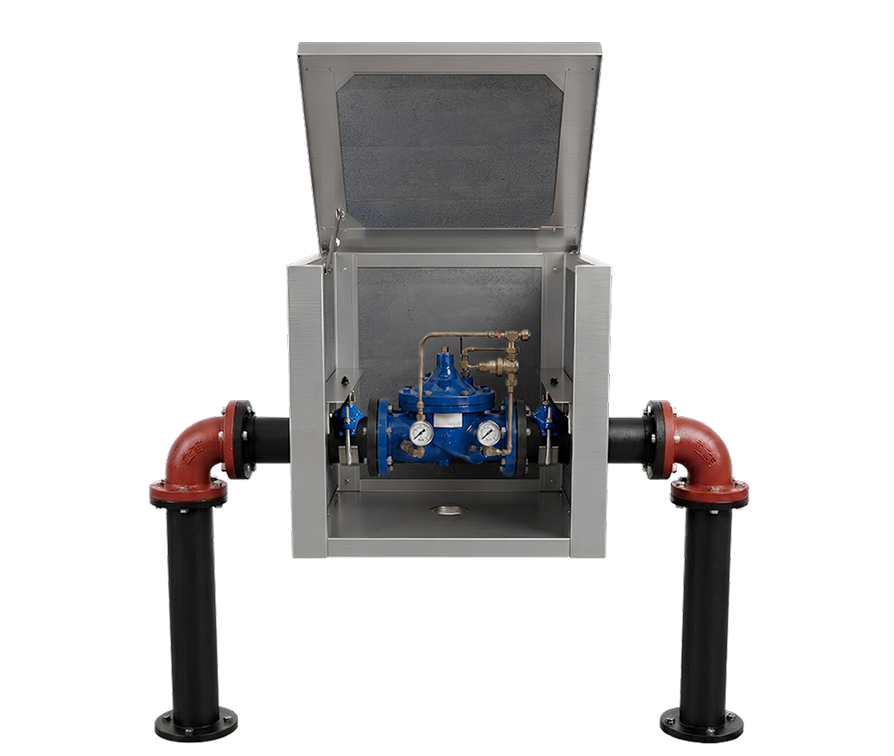
Protected control valve system

Benefits of Enclosures for Control Valves

Protecting Control Valves From External Elements

Enclosures provide protection from external elements and extreme weather, or indoor exposure to excessive heat, moisture or unauthorized access. A weatherproof enclosure guards against rain, snow and dust and holds a stable operating temperature that keeps equipment from freezing or overheating.

Preventing Contamination, Damage and Downtime

A secured enclosure supports a culture of maintenance and safety, protecting equipment from corrosion or contamination that leads to failure. Regular inspection and preventive maintenance remain essential, but keeping a valve enclosed helps ensure operations keep running and prolongs valve lifespan.

Compliance With Industry Standards and Regulations

Control valves may need to be enclosed and secured to meet industry or governmental compliance standards. Check with your local authorities to confirm the regulations in your area. Where an enclosure is not strictly required, going beyond the letter of the law upholds a higher standard of safety and quality.

Cost-Effectiveness and Maintenance Advantages

Safe-T-Cover enclosures are a cost-effective, long-lasting solution for control valve protection. In many cases they last 30 years or longer, and if a panel is damaged, only the broken panel needs replacement rather than the entire enclosure assembly. Modular construction also provides maximum ability to service and repair valve equipment. A modular aluminum enclosure lowers lifecycle cost by lasting decades and allowing panel-level repair.

Types of Control Valve Covers

Look for weather-resistant and corrosion-resistant enclosures. Safe-T-Cover's patented design attaches directly to the pipe and can be installed at any height.

Safe-T-Cover's patented control valve enclosure can be installed at any height

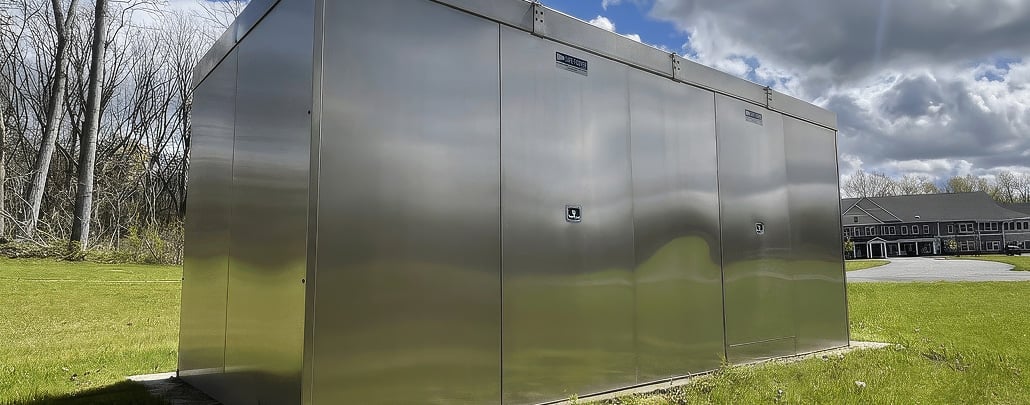
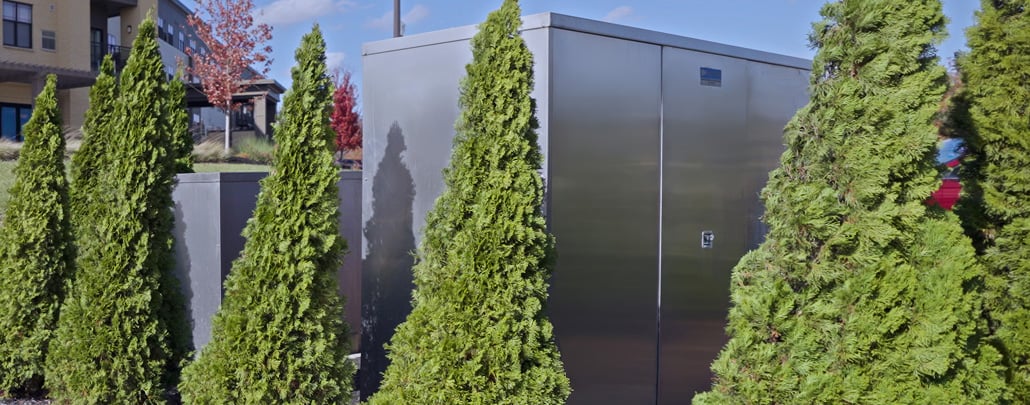
Safe-T-Cover ASSE 1060-certified enclosures are constructed with marine-grade aluminum, braced with durable, sustainable California redwood and insulated with R-9 polyisocyanurate installed directly into the paneling for maximum protection against deterioration or cracking. 

Marine-grade aluminum resists corrosion and rust on its own for decades, protecting the critical components inside. It outperforms alternatives such as stainless steel cages or coated panels that can chip, fade or fail over time, and it does so at a competitive lifecycle cost.

How Enclosure Materials Compare

Specifiers evaluating enclosure options should weigh performance across code compliance, freeze protection, theft deterrence, lifespan and maintenance access. The comparison below reflects field performance. Marine-grade aluminum is the only option that combines ASSE 1060 compliance, freeze protection, security and a 30-year-plus lifespan.

Option
ASSE 1060 compliant
Freeze protection
Theft deterrence
Typical lifespan
Maintenance access
Marine-grade aluminum enclosure
Yes
Yes (Class I heated)
High
30+ years
Full 360° via modular panels
Fiberglass enclosure
Varies*
Limited
Moderate
Varies
Limited
Wire cage
No
None
Low
Varies
Open, but exposed
Below-grade vault
No
Freezes, floods
Moderate
Varies
Confined-space entry required

*Many fiberglass enclosures do not meet full ASSE 1060 requirements.

Specifications and Ordering

Every enclosure is built to the assembly it protects. When requesting details or a quote, have the following ready so the design team can match a model to your application:

  • Assembly dimensions: The valve model, pipe diameter and lay length, along with the clearances the assembly requires, determine enclosure size.
  • Site conditions: Lowest expected temperature, indoor or outdoor placement and any need for ventilation, a filter for airflow or an alarm.
  • Configuration options: Pipe penetrations, window panels, custom colors or a combined meter-and-valve layout can be specified before the unit is constructed.

Custom units are built to order and typically delivered within one month of first contact. Every panel is measured and quality-checked before it leaves the Nashville, Tenn., facility. For more information or to request a quote, contact the Safe-T-Cover team through our chat or our contact form.

Provide the valve model, pipe diameter and site conditions and our design team will match an enclosure to your application.

Control valves are critical to countless applications in business and industry. If your valves are exposed to the elements or to conditions that compromise proper function, protect them with an above-ground, ASSE 1060-certified enclosure built for the job.

FAQ

What is a control valve used for?

A control valve regulates the flow or pressure of gasses or liquids in an enclosed system. Automatic control valves adjust flow in response to a controller signal, holding accurate control over pressure, temperature or level across water distribution, HVAC, energy and process applications.

Should a control valve be covered?

Yes. We recommend all valve equipment be enclosed and secured. A weather-resistant backflow enclosure protects the assembly from freezing, flooding, theft and physical damage while restricting access to authorized personnel.

How do I cover a control valve?

A modular aluminum enclosure like Safe-T-Cover's numerous options provides protection while preserving full access for service and repair. Available configurations cover standard assemblies and large custom applications, and the sizing guide matches an enclosure to your valve model, pipe diameter and required clearances.

How do you keep control valves from freezing?

Control valves should be enclosed, insulated and, if outdoors, outfitted with a slab-mounted heater to guarantee proper operation. A Class I ASSE 1060 enclosure maintains a minimum internal temperature of 40 degrees Fahrenheit at an external temperature of -30 degrees Fahrenheit, with a minimum R-value of 8.0.


Should control valves be insulated?

Yes. Whether to dampen noise or to protect against extreme outdoor conditions, control valves should be enclosed and insulated. Insulation also buys hours of freeze protection during a power interruption, when the enclosure relies on its R-value alone.


How do I size a control valve enclosure?

Sizing depends on the valve's lay length, the required clearances around the device and whether additional components such as meters or isolation valves will share the enclosure. Safe-T-Cover provides a sizing guide and can generate a specification from the assembly model and manufacturer.


Do enclosures need a heater in warm climates?

Increasingly, yes. Freeze events in Florida, Texas and Arizona have caused thousands of assembly failures in jurisdictions that assumed freeze protection was unnecessary. A Class I heated enclosure is strongly recommended anywhere a freeze event can occur.


"Thank you for the support on this job. It shows the character of the company and the commitment to both wholesalers and our customers.”
Chris
Wilkinson Supply
"You guys are the best! Between your quick responses, knowledge, lead times, and pricing there really isn’t another enclosure manufacturer as good as Safe-T-Cover."
Jennifer
Ferguson Waterworks
"You all have some of the best customer service that I have come across, whether it be over the phone or email. Thank you for having such a high standard of excellence at your company, it makes us excited to quote and sell your products."
Nathan
Safe-T-Cover customer
"Excellent, I must say, I have been doing this for almost 20 years and you guys are a pleasure to deal with."
Casey F.
Casey F.
"We had an RPZ failure at the school I work at due to recent weather conditions here on Long Island. The floor-mounted heat sheet Safe-T-Cover offers would do a much better job."
Joe M.
New York
"The piping layout and enclosure sizing is awesome. It will make my life a little easier putting the finished product together."
Fire Protection Engineer
Rhode Island
"Safe-T-Cover provides the best answers and the fastest responses."
Distributor
Washington State
"You have really helped and I will be forwarding your information along to our facilities manager to move forward with a little more detective work. I appreciate your time and effort, and we will be in touch."
Procurement Specialist
California
"Thanks for getting back to me so quickly."
Civil Engineer
Ohio
"WOW!! Thank you. You guys are so great. Seriously, you always ship within the quoted time. We appreciate the hard work."
Waterworks Distributor
Midwest
"I've dealt with some of your competitors in the past and they do not pack enclosures like you do! Safe-T-Cover does a great job. I got one in the past that was damaged because of the packing, and the panels bounced around allowing the handles on the doors to dent the panels packed on top. It was an absolute nightmare to try and get it fixed. I don't have that problem with you!"
Distributor
"Thank you again for all your help. Safe-T-Cover has some good quality customer service and that goes a long way with me."
Contractor
Las Vegas, NV

Need a Custom Solution?

Our custom enclosures are engineered to your exact requirements, with options for size, access, climate control and added features.

Contact Us