Across the United States, backflow preventers — whether on fire or domestic lines — are still routinely installed below-grade in vaults. But the case against that practice has been building for decades, and it's no longer a fringe position.
In multiple publications, the USC Foundation for Cross-Connection Control and Hydraulic Research (USC FCCCHR) has warned that below-grade backflow installations are at risk of flooding, leading to equipment rust and corrosion. If you're still specifying vaults for backflow protection, here are eight reasons an above-ground backflow enclosure is the safer, better choice.
1. RPZs Cannot Go in Vaults, Full Stop
Reduced pressure zone assemblies (RPZs) are prohibited from below-grade installation by every USC and ASSE-approved manufacturer in the U.S. If the system calls for an RPZ, the only code-compliant options are an unprotected outdoor installation or a properly specified backflow enclosure.
RPZs are engineered to discharge water through a relief valve when check valves fail, and an above-ground enclosure with proper drainage handles that discharge safely onto the ground, rather than allowing water to pool around the device.
Many jurisdictions now require enclosed, above-ground installations with ASSE 1060-certified enclosures. Noncompliance can mean fines, failed inspections and legal exposure if a cross-connection occurs.
What about double check valve assemblies (DCs)? Here are seven more reasons why vaults are a bad idea for any backflow assembly.
2. Vaults Are OSHA Confined Spaces
OSHA confined space entry permits require entrant, assistant and supervisor names; the purpose of entry; time required; work performed; and emergency services on standby. There is no way to open a vault with less than a four-figure expenditure.
Excavating and lining a code-compliant below-grade vault costs significantly more than pouring a standard concrete pad for a surface installation.
Above-ground enclosures also are not OSHA-classified confined spaces, meaning there are no entry permits and no four-person crews — just easy access for testing and maintenance.
3. Working In a Vault Can Be Dangerous, Even Fatal
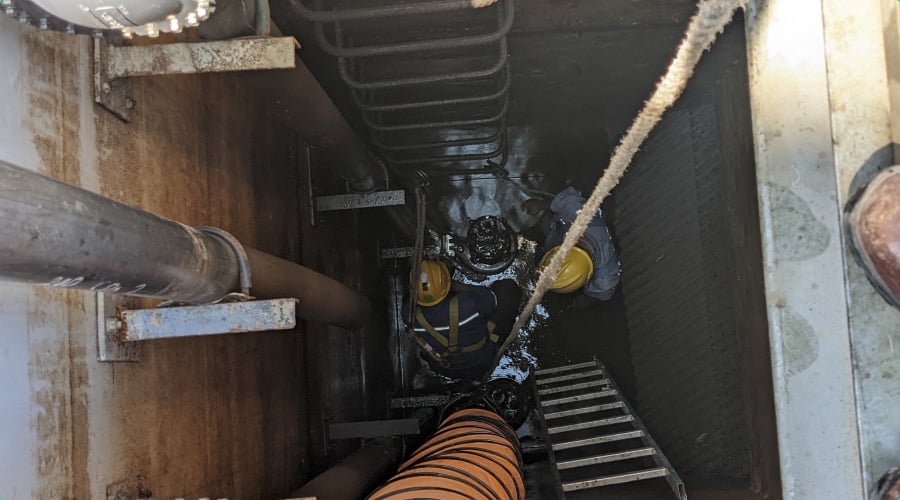
The cost of confined space compliance isn't solely financial. According to the U.S. Bureau of Labor Statistics, more than 1,000 workers died from confined space injuries between 2011 and 2018 — an average of roughly 129 per year, with annual totals ranging as high as 166. With an above-ground enclosure, a technician walks up, opens a removable panel or hinged door, and completes the backflow test. Above-ground enclosures carry none of that risk.
4. Flooded Vaults Violate the IPC
Vaults flood and, when they do, the consequences go beyond equipment damage. Submerged test cocks create a direct contamination pathway into the potable water supply. That risk doesn't exist in a properly drained, above-ground backflow enclosure.
According to the USC FCCCHR, flooded vaults violate the International Plumbing Code (IPC). When a vault floods, mandatory test cocks are submerged. The water may look clean, but run-off of lawn chemicals alone makes this dangerous to the water supply. In fact, it led USC in 2005 to change their recommendation of DC installations stating, "The foundation's recommendation is to install the double check valve above grade."
USC continued to express this position with even more specificity in 2014: "When a backflow preventer is installed below grade, the vault or pit in which an assembly is installed may fill up with water. The water in the pit could create a cross-connection between the water in the pit and the backflow preventer through the test cocks. This may occur whether the test cocks are opened or closed."
This states that vaults may fill up with water, but you may be surprised at how often they do fill up with water. Here's a compilation of photos and videos sent in to Safe-T-Cover by backflow testers in the field.
5. Protect Firefighter Safety
Until recently, double-check detector assemblies for large fire systems were commonly placed in vaults or inside buildings. This is a clear issue when water resources can't be attained within burning buildings or can't be accessed due to confined space hazards.
That's why fire departments across the country are demanding relocation. Above-ground fire line backflow preventers with accompanying Fire Department Connections (FDCs) maximize access and safety to water sources. Chicago, Flower Mound, Tex., Lynchburg, Va., and Charlotte, N.C. are just a few of the many cities that now require outdoor above-ground fire line backflow installation to improve firefighter safety.
6. Backflow Cages Don't Provide Protection
Choosing the right enclosure material is essential for performance and compliance. Backflow cages are not a substitute for a proper enclosure. Cages fabricated from powder-coated steel or aluminum offer basic containment but no insulation, making them appropriate only where temperatures never drop to freezing, which eliminates most of the country.
They also provide no security against vandalism or theft. Backflow assemblies are built from bronze, copper and other high-value metals, and a cage advertises those materials to anyone who wants them.
A fully enclosed aluminum enclosure with a heavy-duty locking mechanism removes the temptation entirely by concealing the assembly from view and blocking physical access. The enclosure also acts as a physical barrier against tampering and unauthorized access in ways a wire cage structurally cannot.
7. Retrofits Cost More When You Start With a Vault
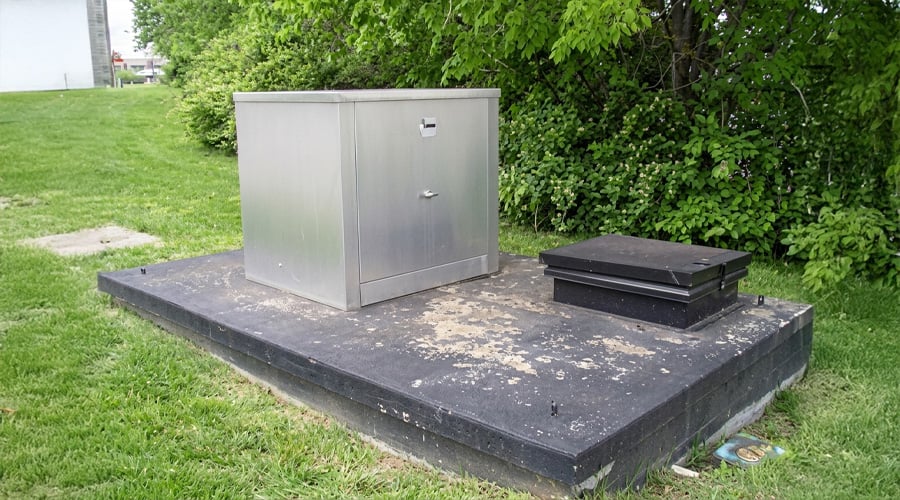
Water hazard classifications can change as tenants change occupancy of buildings and cities update their classifications. So a DC installed in a vault may comply today but require replacement with an RPZ in a backflow enclosure later after the city reclassifies the use. And all of this costs way more than putting the equipment inside an above-ground enclosure right from the start.
Take this recent example involving a Nashville, Tenn., property. When an automotive dealer bought a property and erected the building, they put a DC in the vault with the meter. This was consistent with then-current guidelines.
A few years later, the city changed an ordinance that redefined this business' use to high hazard. The city eventually forced them to change to an RPZ. After constructing a huge vault, it's now left empty with an RPZ in a backflow cover on top. They easily paid three times for a single solution simply because they began with a vault. This exact scenario has recurred repeatedly in jurisdictions around the country. When it does, you're paying for the vault, the retrofit and the enclosure. Starting above-ground removes that risk.
8. The Legal Community Recommends It
The late Doug Cregor, attorney and recognized authority in cross-connection control litigation, argued that outdoor, above-ground installation reduces owner exposure to flooding damage, cross-connection contamination and liability exposure for engineers, installers and testers. He cited ASSE 1060 as the standard that makes that protection real and enforceable. IPC code 608.14.1 confirms it: "Outdoor enclosures for backflow prevention devices shall comply with ASSE 1060."
"An outdoor, above-ground BPA installation may be the best way to 1) reduce the owner's exposure to damage caused by flooding and the corresponding water contamination caused by a cross-connection; and 2) reduce the legal liability of the design engineers, the installers, and the certified testers whose professional actions, in part, may have otherwise caused the flooding harm. The water industry has a nationally accepted design criterion in ASSE's Standard-1060 to protect these installations. It's a win-win-win 'insurance policy.'" —Plumbing Standards Magazine, Summer 2009
The best place to install a backflow preventer is outdoors, above-ground, inside an ASSE 1060-certified aluminum enclosure. This setup protects the device from freezing, flooding, vandalism and environmental damage, while allowing ready access for testing, maintenance and inspection.
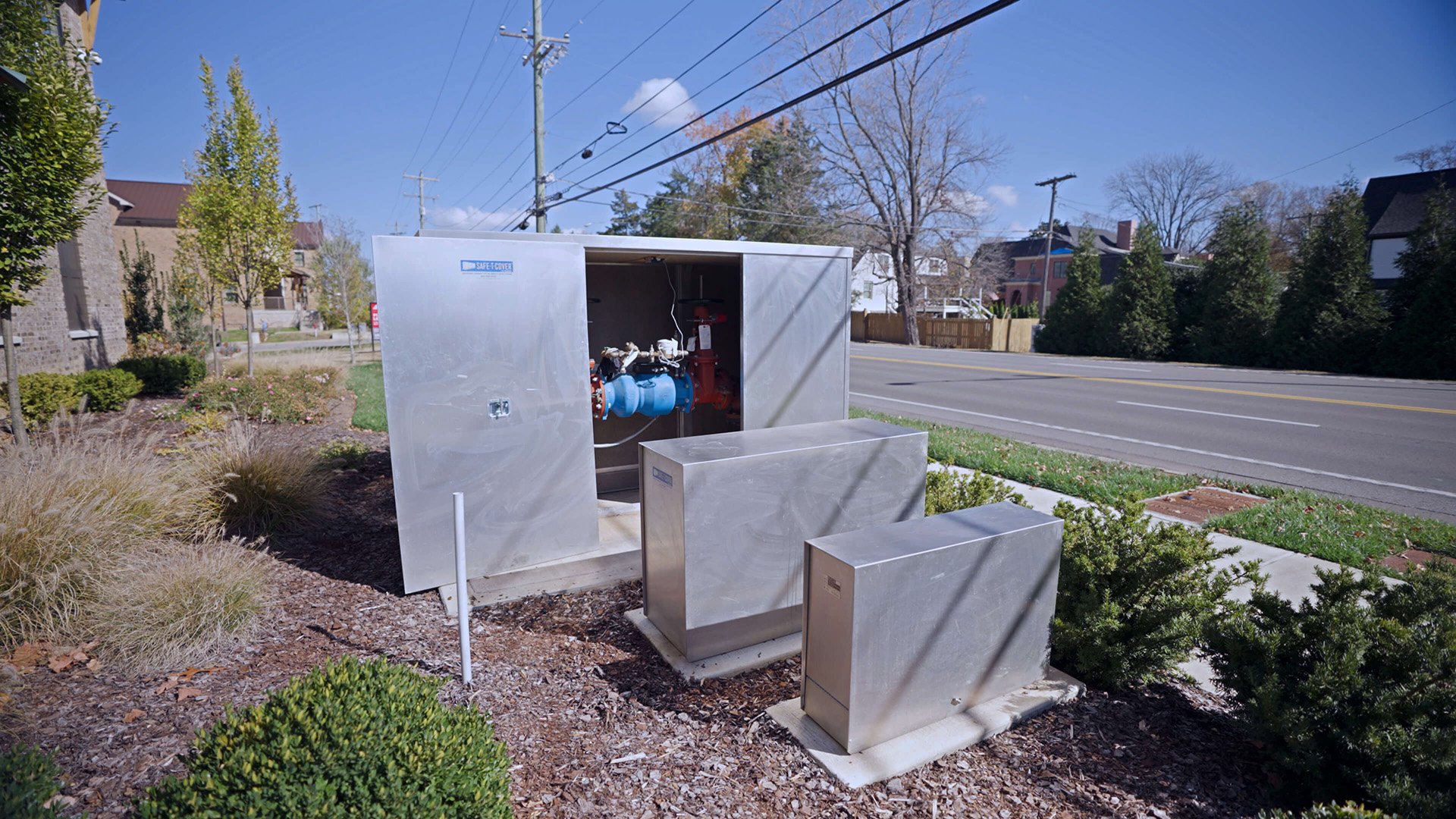
Choose an Above Ground Backflow Enclosure That Meets ASSE 1060
Our above-ground backflow enclosures are constructed from marine-grade aluminum with internal insulation, a combination that withstands harsh conditions, keeps assemblies dry, shields brass and plastic components from freeze damage, and blocks UV exposure that would otherwise crack and degrade plastic parts over time. For summer, we offer ventilation options that promote airflow and dispel heat, as well.
Aluminum in particular is lightweight, corrosion-resistant and holds up in demanding environments, including coastal and marine-adjacent installations. Keeping the assembly dry and protected significantly extends the service life of backflow components by limiting the corrosion that wet, unventilated vault environments accelerate.
Safe-T-Cover offers heaters for aluminum enclosures to maintain freeze protection in even the most harsh conditions. Enclosures are available in multiple sizes and configurations to fit standard assemblies from major manufacturers, and we build durable, custom enclosures to spec. Find your size here.
For municipalities and engineers ready to move past the vault, our free Standard Details Guide includes editable CAD templates for five above-ground installation types and an ASSE 1060 compliance checklist.


.jpg?width=206&name=MadeInUSA-Icon%20(1).jpg "MadeInUSA-Icon (1)")