RPZ Backflow Enclosure Solutions That Prevent Flood Damage

An above-ground RPZ backflow enclosure is the best solution to prevent flood damage.
Jump To Topic

Most plumbing engineers, building owners and property insurers have no idea how much water an RPZ assembly can discharge — or what that means for a mechanical room, a commercial building or a vault.

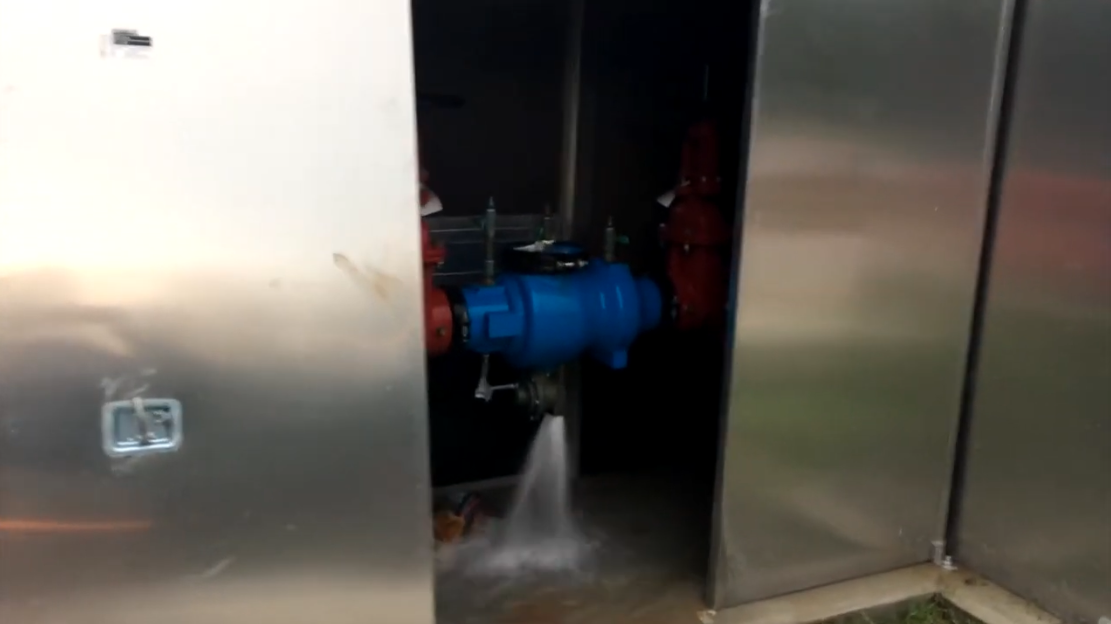
Watch this video of a 3" RPZ dumping water and you'll understand the risk immediately.

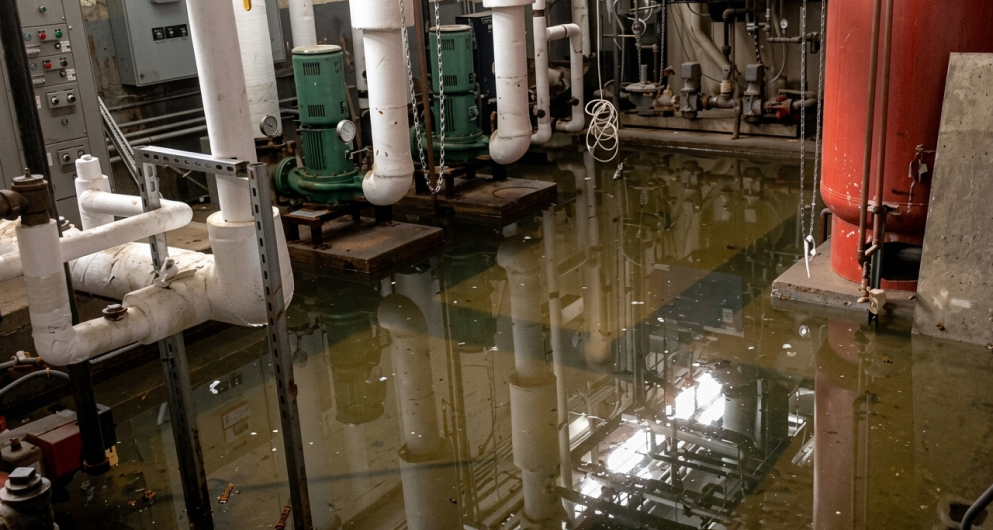
Here's more proof why you shouldn't install an RPZ indoors or in a vault, and what you should specify instead so you don’t end up with a room that looks like this.

A flooded room due to an RPZ dumping water per its design.

What Makes an RPZ Assembly Different From Other Backflow Devices

The key difference between a reduced pressure zone assembly and a double check (DC) assembly is function under failure. RPZ assemblies are engineered to dump water to protect the potable water supply from contamination.

That design is intentional. In normal operation, when water demand stops, the water between the check valves evacuates through the relief valve. Many engineers assume that event defines maximum discharge, but it doesn't.

For a more detailed comparison of backflow prevention devices, here's a breakdown of DC vs. RPZ preventers.

How the 'Perfect Storm' Creates a Flooding Scenario

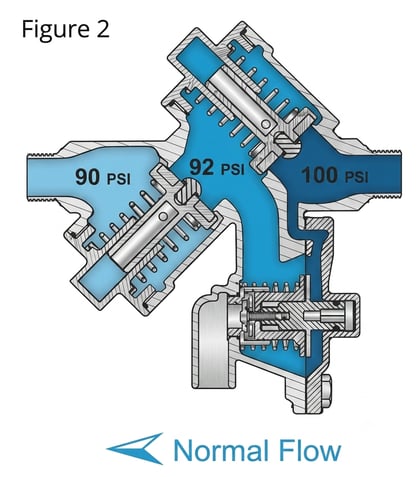
Designers need to plan for worst-case conditions, so here's how cascading valve failures lead to catastrophic flooding. This diagram shows the normal flow of an RPZ.

Reduced Pressure Backflow Preventer Diagram


Scenario #1: A flow-stop situation that occurs at the end of a workday

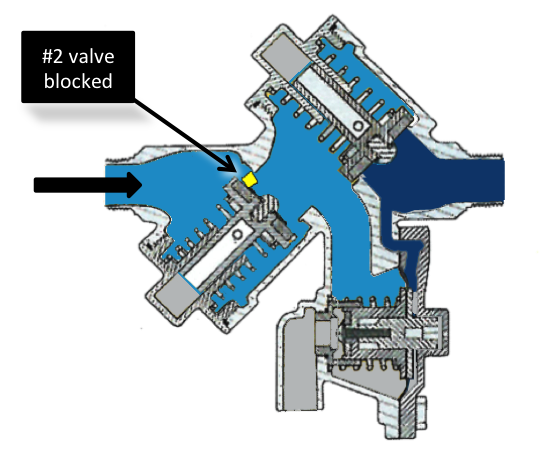
Let's say a small pebble lodges in the No. 2 check valve. If a backsiphonage event occurs nearby in the system while that check valve stays open, all water delivered to the building continues flowing through the relief valve until the private lines clear. In a four-story building, that volume of water is significant.

No. 2 check valve in an RPZ is blocked.


When the No. 2 valve in an RPZ is blocked, the device discharges water by design.


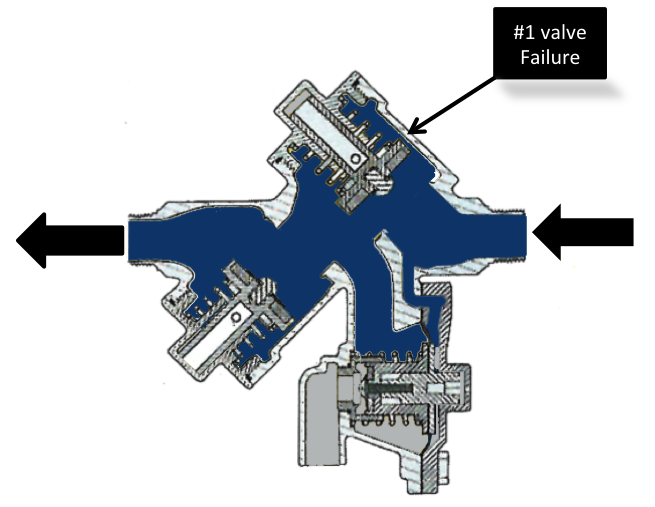
Scenario #2: Failure of the No. 1 check valve

Under normal operating conditions, this failure goes unnoticed and water continues flowing based on user demand. But with this imbalance in the system, changes in demand tend to rock the remaining valves open and closed sporadically. That instability makes the relief valve more prone to momentary openings, which allows debris to block its closure.

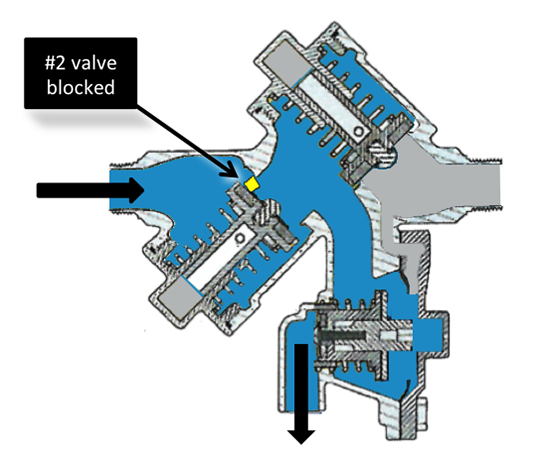
The No. 1 check valve has failed in this RPZ.


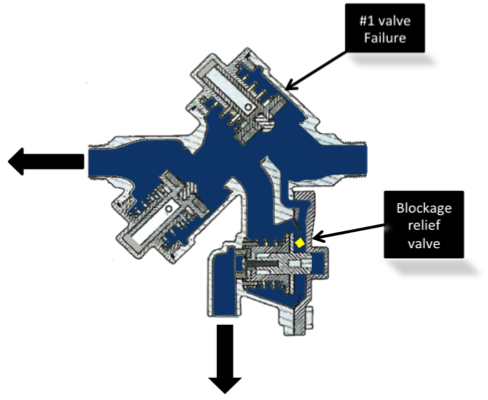
When the No. 1 valve has failed and the relief valve is blocked it results in RPZ flooding.

Scenario #1 + Scenario #2 = The Perfect Storm

Once the relief valve is blocked open and the No. 1 check valve is inoperative, water pours through the relief valve until the supply is cut off. This reduces water pressure for the user, but delivery will continue. The real damage begins when the user stops using water — typically at the end of the day — causing flooding to accelerate. This is the scenario designers must prevent.

RPZ Backflow Preventers Don't Belong Inside

A Real Example: $1 Million in Damage From an RPZ Valve

One hospital mechanical room took the full force of an RPZ failure. We have some rare photographs of such an event; these pictures almost never reach the public because no one wants this problem on display.

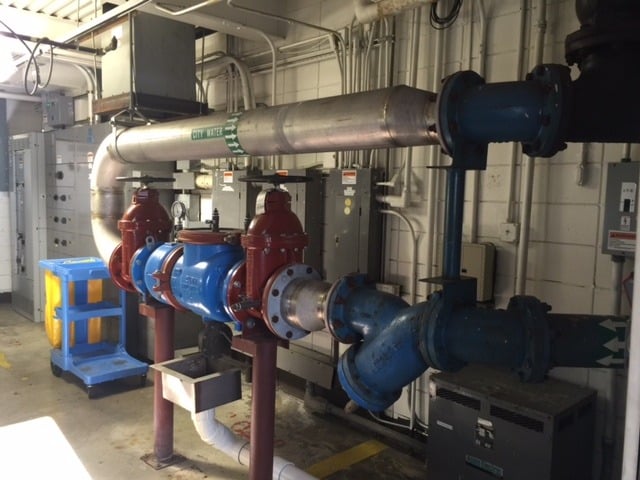
This first image shows a Wilkins 375 4” RPZ valve in a typical mechanical room setup. Note the 4” floor-drain to the right. During a weather event, this RPZ began dumping huge volumes of water — consistent with its intended design -— to protect the water supply.

According to EngineeringToolbox.com, a four-inch drain system installed with a 1% grade descent will clear as much as 93 gallons of clean water per minute. By dumping 375 GPM and only draining at 93 GPM, this facility could have flooded at a rate of 282 GPM!

These photos display the aftermath. The sudden water flow and volume moved the righthand wall into the next room, which happened to be a telephone and low-voltage wiring room. Damage exceeded $1 million. (Keep in mind that even a smaller 3” reduced pressure zone backflow assembly can fill a 12x12 mechanical room to its ceiling in about one hour...if the walls hold.)

A Wilkins 375 4” RPZ valve in a typical mechanical room setup that flooded and damaged the wall leading to a wiring room.


A damaged wiring room due to RPZ discharge

Through the insurance policy's subrogation clause, the property insurer pursued recovery from all risk holders: the engineer, architect, contractor, subcontractor and the most recent recorded tester. Only the tester was exonerated because he showed his annual test record from three months prior, indicating proper working order.

While the breakdown of payments was not made public, the insurer was made whole by one or more litigants. This is not a situation you want to find yourself in!

Increasing Drainage Size Is Cost Prohibitive

The most common approach to managing RPZ relief valve discharge is to route it to floor drains, sinks or spouts. In practice, drainage requirements for large assemblies make this approach difficult and too costly.

Backflow preventer manufacturers publish relief valve discharge rates for all RPZ models and sizes, and they've developed flood control valves designed for use with RPZ assemblies. Using that data, David E. DeBord, past president of the American Society of Plumbing Engineers' Chicago chapter, published flood rate charts for typical relief valve sizes at a constant pressure of 65 PSI.

For indoor RPZ installations, he concluded that “…the floor drain capacities of RPZs of three-inch diameter and higher are likely to be cost-prohibitive due to the necessary pipe diameter and fall rates."

An RPZ installed in an electrical room is a flood disaster waiting to happen.

Municipalities That Require RPZs

Most municipalities now require RPZ installations for commercial properties and certain residential applications to protect the potable water supply from contamination.

This list is not comprehensive, but reflects just how many municipalities across the country have updated their standard details and local codes to conform with recommended best practices.

Albuquerque, NM

All new non-residential premises must have a reduced pressure principal backflow prevention assembly approved by the water authority and installed at each domestic service connection.

Las Vegas, NV

RPZs are required for commercial, domestic and irrigation services, while RPDAs are required on fire line services — one of the more comprehensive requirements in the country.

Seattle, WA

Seattle Public Utilities requires RPBA/RPDA for high health hazard facilities, installed just downstream of the water meter where the transfer of ownership happens.

Suffolk County, NY

Suffolk County Water Authority, the largest on Long Island, has an active cross-connection control program using RPZs as an approved device, required by New York State Sanitary Code.

Lynchburg, VA

Lynchburg has required RPZs on all non-residential connections since 2008. This includes domestic, irrigation and fire lines.

Fort Worth, TX

In 2010, Fort Worth added a clause to their code for all new commercial properties stating they needed an RPZ device to provide the highest protection.

The following list of Texas cities has since followed Fort Worth's lead and added RPZ mandates to their respective codes:

Addison, Alpine, Arlington, Bedford, Boerne, Buda, Carrollton, Cedar Hill, Cleburne, College Station, Colleyville, Crowley, Denison, Denton, Duncanville, Farmington, Farris, Franklin, Gainesville, Grand Prairie, Haltom, Highland Village, Midlothian, Roanoke, Round Rock, Saginaw, Texarkana, Waco, Waskom.

Elgin, IL.

Elgin added requirements to the city code to put RPZs on all domestic lines in commercial and industrial properties since 2012.

Naperville, IL.

Required RPZs on commercial irrigation lines for years, and in 2013 started to require RPZ valves on domestic and fire lines for commercial buildings.

Delaware, OH

In 2013, added a requirement for all industrial, commercial and institutional water services to have an RPZ device outside and above ground in a protective enclosure.

The Solution: Outdoor RPZ Enclosures

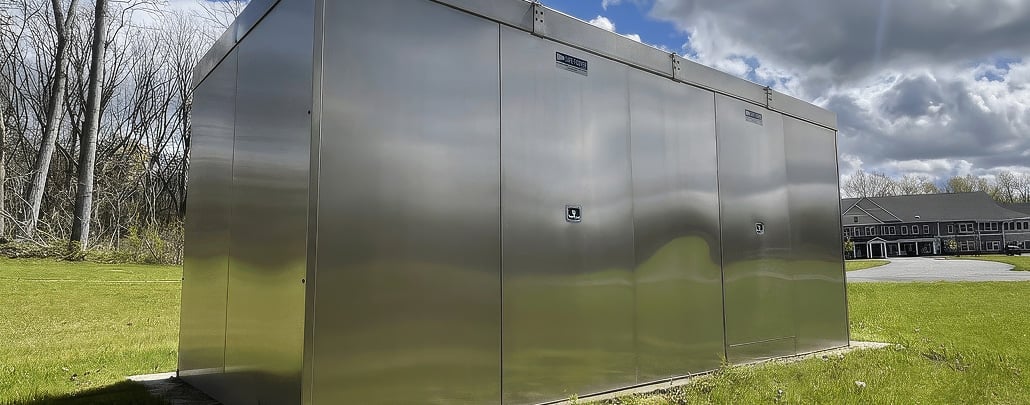
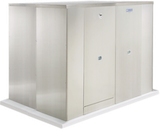
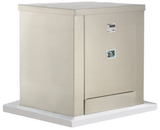
Outdoor, above-ground RPZ enclosures constructed from marine-grade aluminum handle relief valve discharge safely when sized with proper drainage. This is the best choice for protecting RPZs.

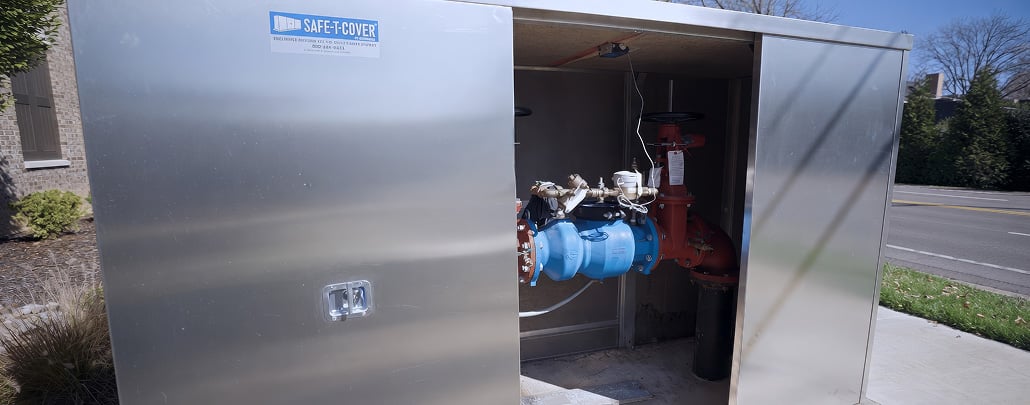
RPZ inside an aluminum enclosure by Safe-T-Cover

Benefits of aluminum enclosures for RPZs:

  • Provide easy access for inspection and testing, protect equipment from freezing temperatures and freezing conditions, and eliminate the contamination and flooding risk that indoor installation creates.
  • Aluminum enclosures are modular, lightweight and all Safe-T-Cover enclosures come with insulation for freeze protection in a range of sizes and colors to suit site requirements.
  • Marine-grade 5052-H32 aluminum resists corrosion and rust in harsh conditions, including rain, heat and temperature extremes.
  • Unlike powder-coated steel, aluminum won't wear through or degrade over a 30-year service life.

All Safe-T-Cover enclosures are ASSE 1060 certified. In many jurisdictions, above-ground enclosures must comply with ASSE 1060 — the national standard for outdoor protective enclosures — which governs internal dimensions, freeze protection, drainage and security requirements. Many local plumbing codes also mandate ASSE 1060-certified enclosures specifically to ensure backflow prevention assemblies remain functional and accessible for annual testing.

Comparing Backflow Preventer Enclosure Types

Backflow enclosures are manufactured from a range of materials — aluminum, stainless steel, fiberglass, high-density polyethylene and plastic — each with different performance profiles for durability, freeze protection and security. Understanding the tradeoffs matters when specifying for long-term infrastructure.

Properly specified enclosures do more than protect the equipment. Enclosures that meet plumbing code requirements help facility owners and engineers avoid legal liability and fines tied to noncompliant installations — an outcome that matters most when an RPZ failure leads to a flood and insurers begin tracing responsibility.

crossBackflow Cages

Steel cages are built for physical security but provide no insulation, making them appropriate only in climates where temperatures stay consistently above freezing. Once freezing conditions are a possibility, a cage is the wrong choice: it leaves the assembly fully exposed to ambient temperatures, which means cracked valves and failed components after a cold snap.

check Choose instead

Insulated and heated enclosure that actively maintain interior temperatures above freezing, which prevents pipes and valves from cracking during winter — a feature that is built in as standard with ASSE 1060-certified aluminum enclosures, not added on.

crossFiberglass, Plastic and Fake Rocks

Fiberglass covers can offer locking systems and some insulation, but fiberglass is susceptible to UV degradation over time and generally does not match the long-term durability of aluminum. Plastic enclosures are available at lower upfront cost and may include insulated bags for basic frost resistance, but they typically lack integrated locks and offer limited protection against tampering or theft.

Fake rock enclosures — molded from plastic or fiberglass — provide a low-profile appearance that can reduce visual temptation for theft, but they lack true locking mechanisms and do not provide reliable freeze protection for assemblies in cold climates.

check Choose instead

Aluminum enclosures constructed with lockable panels that deter vandalism and tampering, providing added security over open cages that advertise the equipment inside.

What Architects & Engineers Should Consider

If you're a design engineer or architect, your client's risk is your risk. The evidence for moving RPZ assemblies outside is substantial: flood liability, drainage compliance challenges and insurer subrogation exposure.

In many jurisdictions, water authorities now require or recommend above-ground enclosures for new irrigation systems, lawn and green space installations, and commercial backflow prevention applications. Pressure vacuum breakers and other backflow prevention devices used in irrigation systems are often covered by the same local plumbing codes that govern RPZ assembly placement.

Moving the RPZ outside removes risk and eliminates complex indoor installs. Above-ground aluminum enclosures provide the protection, access, security and compliance that indoor installation simply cannot.

Get started by finding the right size enclosure for your RPZ.

FAQ

Why would an RPZ leak water?

An RPZ assembly discharges water through its relief valve when the check valves fail to seat properly or debris blocks valve closure. This is by design — the assembly is protecting the potable water supply from contamination. The problem is when that discharge occurs inside a building.

Does an RPZ require a floor drain?

Many jurisdictions and plumbing codes require drainage for indoor RPZ assemblies, but floor drain capacity for assemblies three inches and larger is often cost-prohibitive. Above-ground outdoor installation routes discharge to grade and eliminates the drainage problem.

What is an RPZ in water systems?

A reduced pressure zone assembly is a type of backflow prevention device that uses two independently operating check valves and a relief valve to protect the potable water supply. It's the required assembly for high-hazard cross-connection applications.

Need a Custom Solution?

Our custom enclosures are engineered to your exact requirements, with options for size, access, climate control and added features.

Contact Us