.png?width=1030&height=530&name=custom%20color%20on%20enclosure%20with%20protection%20(1).png)
3. Aesthetics & Protection
Nearly every enclosure exists to protect a device, and those devices are usually critical, expensive capital equipment. Many installations involve valuable metal and provide access to protected systems such as drinking water or hazardous chemicals. That makes the enclosure a barrier against several threats at once, not just the weather.
Design for four:
- Weather, the baseline every enclosure should handle
- Vandalism
- Theft, particularly of scrap metal
- Terrorism, where the concern is unauthorized access to drinking water or chemical systems
Protection comes in two forms. Active protection is the obvious kind: a robust structure and lockable doors that physically keep intruders out. Passive protection is less obvious.
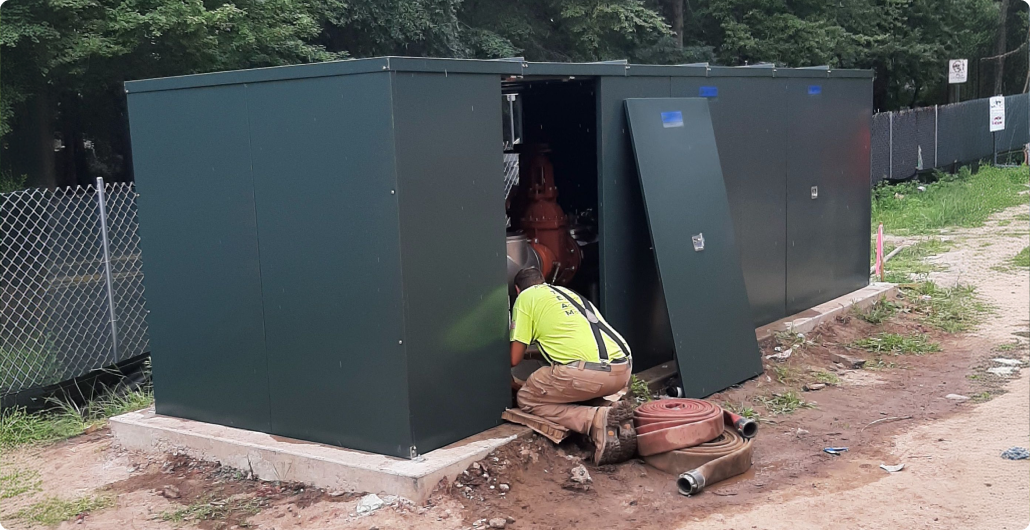
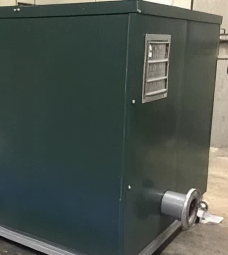
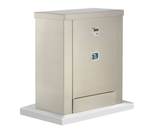
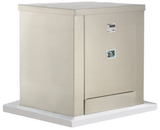
An enclosure sized correctly, finished in a custom color and kept discreet draws no attention, and equipment no one notices rarely is targeted. Avoiding attention prevents most theft and vandalism before it starts.
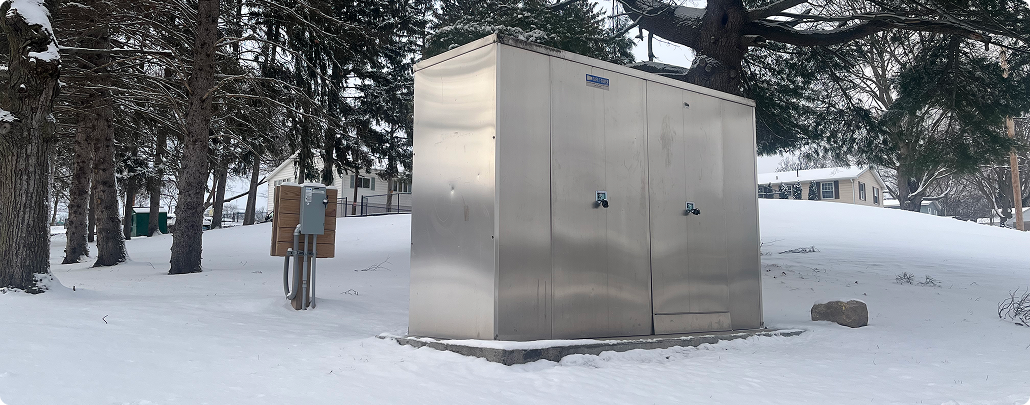
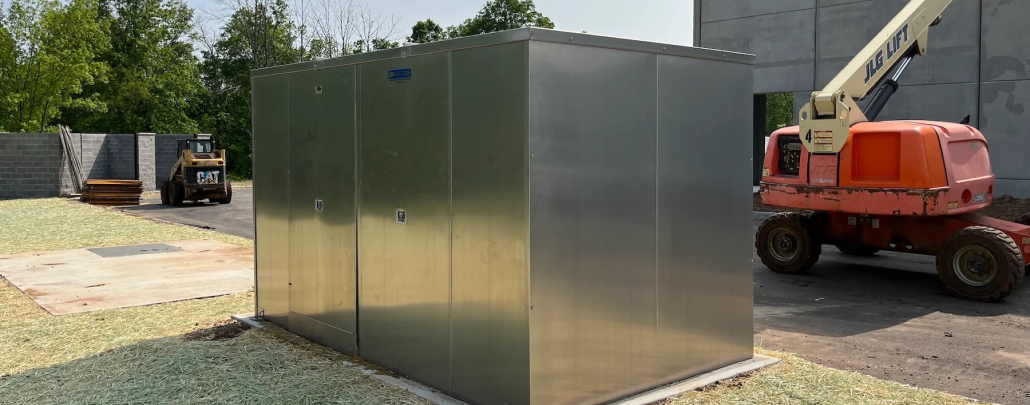
Those passive features serve the aesthetic goal at the same time. The ideal enclosure is functionally invisible: present when you know where to look, but otherwise blending into its surroundings through the right size, color and simple exterior.
That invisibility does more than satisfy neighbors. It opens up sites that used to be handed to below-grade vaults purely because the equipment couldn't be seen. Vaults have big issues — wet environments, difficult maintenance access and OSHA confined-space requirements — that engineers accepted as the cost of keeping equipment out of view.
An innocuous above-ground enclosure removes that tradeoff. It can be designed to blend into sites while eliminating the flooding, access and confined-space problems that come with putting equipment underground.
4. Access & Maintenance
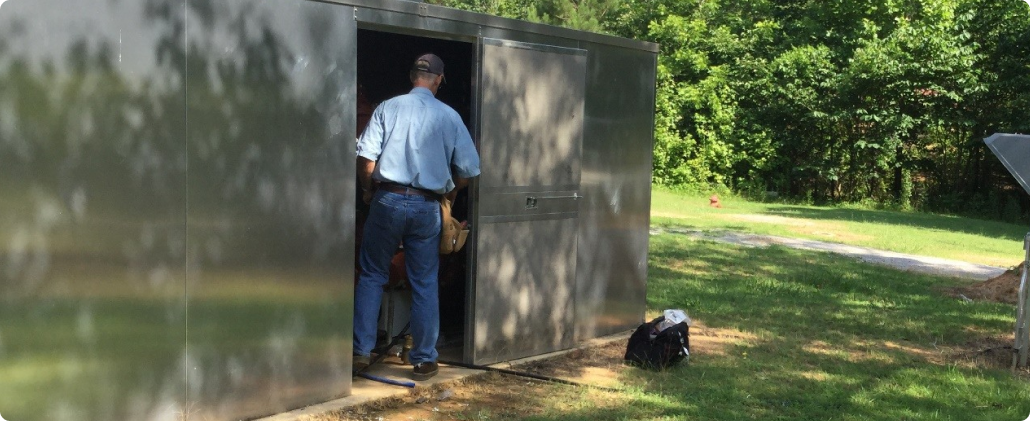
Equipment requires maintenance, and how easily that maintenance can be performed often determines whether preventive work actually gets done and how much downtime a repair causes. Design the enclosure for both.
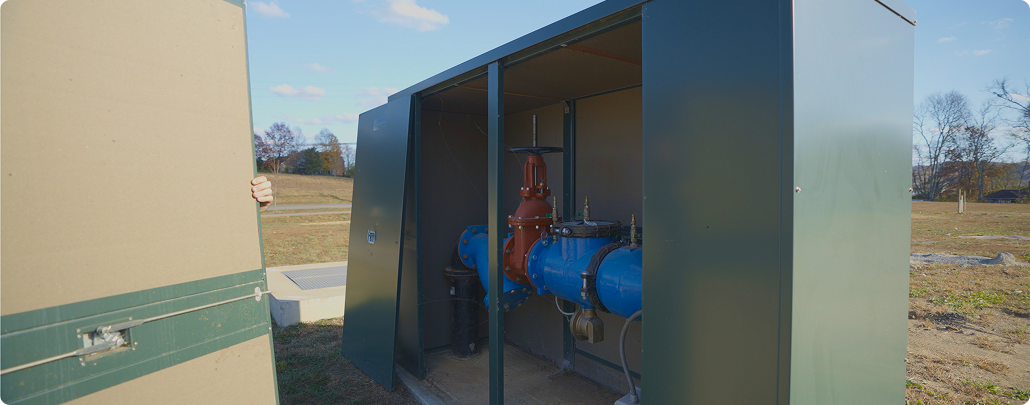
Panels and doors should be placed to give crews direct access to critical service points — drain cocks, changeable filters, gauges, power supplies and test cocks. ASSE 1060 sets the baseline here: test cocks and valve handles must be within 24 inches of the access opening, and access panels must be lockable and weigh 70 pounds or less.
Roof access is the detail most often overlooked, right up until a failure requires hoisting equipment in or out. Most enclosure systems preclude it. Fixed-roof buildings can't be opened from above, which turns a routine equipment swap into a much larger job. Modular enclosures with hinged doors or removable door panels make installation and replacement easy.
Above or Below Grade?
OSHA classifies subterranean utility vaults as permit-required confined spaces, so routine service means atmospheric testing, a standby attendant and a rescue plan every time a crew goes in.
An above-grade enclosure avoids that entirely. Remove the access panel and a technician can service the equipment from grade — no entry, no permit and none of the training and cost that go with it. The throughput difference is stark: a tester can complete roughly 30 backflow tests a day at curbside above-ground installations versus about six in vaults.
Maintenance teams live with an enclosure decision for a decade or more. Designing for genuine access up front pays back in more consistent preventive maintenance, lower per-visit cost and equipment that lasts longer because servicing it is more feasible.
5. Application Flexibility
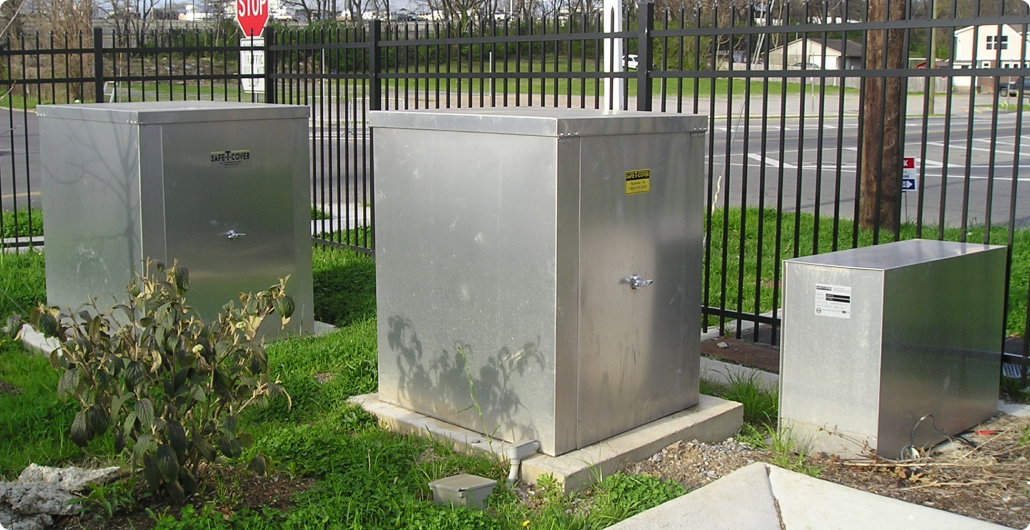
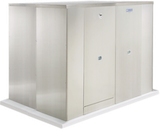
The enclosure should meet your requirements, not dictate your design; it's remarkable how often that's inverted. The right enclosure installs over existing piping, accommodates custom penetrations at any diameter and location, and adapts through modular construction to whatever the application demands.
A standard configuration forces the job to fit the box, while the right configuration just fits the job. So the question becomes what you should look for in an enclosure provider to get a custom-fit solution without the cost, lead time and hassle that ‘custom’ usually implies.

.png?width=1030&height=405&name=cad%20drawings%20(4).png)

.jpg?width=206&name=MadeInUSA-Icon%20(1).jpg "MadeInUSA-Icon (1)")