When choices are limited for storing fire pump equipment indoors, pump houses and aluminum pump enclosures can offer exterior solutions. But installation requirements vary depending on which housing solution you choose.
To determine what cover you need, start with your goal for cost, maintenance ease and capacity. Because of their function, fire pumps can be quite large and may be located inside or outside buildings.
A fire pump can be driven by an electric motor or a diesel engine, and configurations range from
horizontal split case and centrifugal pumps to vertical turbine pumps drawing from a reservoir. They provide the water pressure needed to supply a fire sprinkler system inside large high-rise building or storage warehouse, and to charge the fire sprinkler system during an emergency.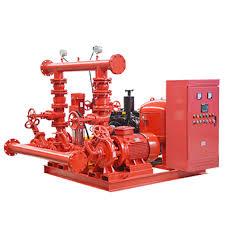
And don't forget about booster pumps. A booster pump plus a pressure maintenance pump help make up for any lack of pressure in the local water supply, water tank or other water sources.
When Fire Pumps Need Protecting
A common practice is to store fire pump systems inside the primary building, which has some advantages. To begin with, the building itself provides protection from weather, and would most likely include a designated pump room where the fire pump can easily be accessed for maintenance, inspection and testing.
The potential downside of storing pump equipment inside is that it takes up valuable retail or commercial space. Fire sprinkler system drops, valves and control panels all need to stay reachable, and NFPA standards call for the fire pump to be inspected and tested on a regular basis, including a weekly no-flow start.
When there's not enough room inside the building or the retail floor space is too valuable to give up, the alternative is to locate the fire pump in a pump house. Here are a couple options available to store fire pump equipment outside a facility's walls.
Option 1: Pump Houses for Fire Systems
One option is to store the fire pump system inside a large pre-fabricated building. They're typically located near the main structure. Pump house manufacturers promote them as a long-term solution for fire systems in various climates.
Pump houses are prefabricated and arrive assembled. They can be customized with different doors, light, climate control and finish options. The downside is you need a permit because they're considered a permanent structure.
Option 2: Aluminum, Modular Pump Enclosures
.jpg?width=1200&height=628&name=Large%20Red%20Enclosure%20(1).jpg)
An alternative pump house solution is a modular panel design enclosure. Aluminum-paneled enclosures are constructed from individual insulated panels that are quickly assembled on-site and can be easily disassembled if needed. They're not considered a permanent structure, so there's no need for permitting.
Because the exterior is made of separate panels, each panel can easily be swapped for a door or access panel, allowing for efficient and safe equipment maintenance and repair. It also means a single panel can be shipped to replace a damaged one, so the enclosure stays reliable over the fire pump's lifetime.
Modular enclosures can also be made with removable roofs so the equipment inside can be completely replaced, which is obviously not an option with a permanent pump house structure.
Modular pump enclosures can be secured to concrete slabs or skids to allow for transportation from one project site to another. For aesthetics, they can be colored or even wrapped in custom vinyl graphics.
Why Choose Aluminum Enclosures for Fire Pumps and Fire Protection?
Expansive Size Ranges
Aluminum is very easy to work with and can be customized to meet nearly any specific size requirement. There are many brands, sizes and layouts with fire pump applications, and using a modular design makes it easy to size the enclosure specifically for the equipment's needs, whether that equipment is electric or engine-powered.
Easy To Customize
Because it's so easy to work with, aluminum also allows for piping penetrations on-site. Fans, dampers, windows and more can be added if needed.
Cost-Effective
If pricing is swaying your decision between a pump building or a modular aluminum enclosure, know that paneled enclosures ship flat, significantly reducing freight costs and damage risk.
Great Weather Protection
Pump enclosures contain sensitive equipment such as control panels and electronics that can't get wet or covered in snow. A reliable enclosure is essential to keep the fire protection system ready to perform, so you'll want one capable of standing up to wind and rain and able to handle heavy snow, too.
If you're in the market for a fire pump cover, see How To Design and Buy a Pump Enclosure for your next step.


.jpg?width=206&name=MadeInUSA-Icon%20(1).jpg "MadeInUSA-Icon (1)")